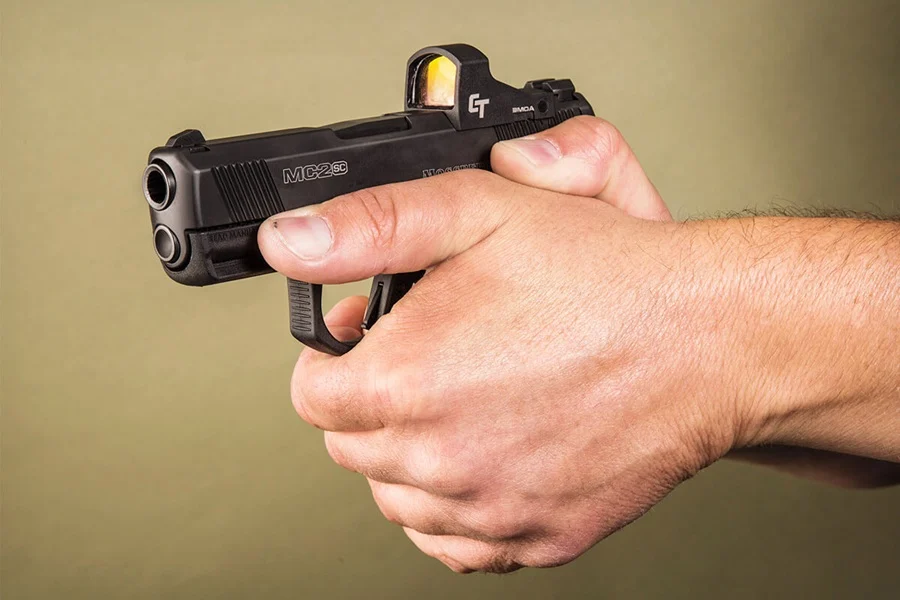
How to Grip a Pistol: Step-by-Step Instructions

How to Grip a Pistol: Step-by-Step Instructions

Why Proper Pistol Grip Technique Matters

Enhances Accuracy and Precision

  • Your grip directly affects the stability of the pistol, which in turn impacts accuracy.
  • A consistent grip minimizes unnecessary movement caused by recoil, allowing for more precise follow-up shots.
  • Proper alignment between your hands, arms, and the firearm reduces deviation from your target.

Improves Control During Recoil

  • Firearms produce recoil after every shot; without a stable grip, this force can make it difficult to maintain control.
  • A proper grip absorbs much of this energy, helping you return to your shooting stance quicker for successive shots.

Promotes Safe Handling

  • Effective grip reduces the risk of unintentional discharge by ensuring you maintain a firm hold at all times.
  • It minimizes finger fatigue during extended shooting sessions, reducing errors caused by shaky hands or poor focus.

Builds Confidence

  • When you know your pistol is secure in your hands, you’ll feel more confident in your ability to shoot safely and accurately.
  • Confidence in handling can lead to better decision-making under pressure.

Reduces Physical Strain

  • An improper grip may put unnecessary strain on your wrists and forearms. Over time, this can lead to discomfort or even injury.
  • The right technique allows natural hand positioning that distributes force evenly across your muscles and joints.

Key Considerations for Choosing a Grip Technique

Essential ComponentExamples/Explanation
Firm PressureYour strong hand should have firm but not overly tight pressure—like holding a hammer—while maintaining dexterity.
Finger PlacementThe trigger finger should rest naturally along the frame until ready to shoot. Avoid curling other fingers inward unnecessarily.
Thumb PositionThumbs should remain clear of moving parts such as the slide (for semi-autos) or cylinder (for revolvers).

By prioritizing these elements early on in firearms training, shooters build strong foundational habits that will serve them throughout their practice.

Practical Implications Across Contexts

Whether you’re at a range practicing for sport or using a firearm for self-defense purposes, the importance of proper pistol grip remains constant. Skipping this fundamental skill increases risks such as poor shot placement or accidents due to loss of control over the weapon.

Understanding why this technique matters builds awareness about its role in overall firearm proficiency—and serves as motivation to continually refine this essential skill set during practice drills and real-world applications alike.

Step 1: Position Your Strong Hand Correctly

Positioning your strong hand correctly is one of the foundational aspects of gripping a pistol. This step directly impacts your ability to control the firearm, manage recoil, and maintain accuracy during shooting. A proper strong-hand grip ensures stability, reduces strain on your wrist, and maximizes control over the weapon.

Key Steps for Strong Hand Placement

  1. Place the webbing between your thumb and index finger high up on the pistol’s backstrap (the curved portion at the top rear of the grip).
  2. A high grip reduces muzzle rise during recoil and improves overall stability.
  3. Avoid any gaps between your hand and the backstrap as this can lead to reduced control.
  4. Your middle, ring, and pinky fingers should wrap around the front strap (the front part of the pistol’s grip).
  5. Apply firm pressure with these fingers while keeping your grip consistent across all shots.
  6. Ensure there is no excessive squeezing or tension that could lead to fatigue or shaking.
  7. Rest your strong-hand thumb flat along the side of the firearm’s frame or slightly forward near any textured areas designed for thumb placement.
  8. Avoid placing too much downward pressure with your thumb, as this can potentially interfere with trigger pull mechanics.
  9. Keep your wrist straight and aligned naturally with your forearm.
  10. An angled or bent wrist can cause discomfort over time and reduce precision when aiming or firing multiple shots.
  11. Adjust Grip Based on Firearm Design
    Different pistols come in various sizes and shapes:
    • Compact Pistols: These often require adjustments to ensure full contact due to limited grip space.
    • Full-Sized Pistols: Allow a more natural placement but still require attention to ensure no gaps exist between hand and firearm.

Tips for Ensuring Proper Strong-Hand Grip

  • Test different levels of pressure until you find a balance where you have full control without over-squeezing.
  • Use textured areas on modern pistols’ grips (if available) for added traction.
  • Practice dry-firing exercises regularly to develop muscle memory for correct positioning.

Table: Dos and Don’ts for Strong-Hand Positioning

DoDon’t
Hold firmly but not excessively tightLet gaps form between hand and backstrap
Align wrist naturally with forearmAngle wrist awkwardly
Position thumb alongside frameWrap thumb around grip unnecessarily

By following these guidelines, positioning your strong hand correctly will improve not only comfort but also performance at the range or in defensive scenarios.

Support Hand Placement and Pressure

When learning how to grip a pistol effectively, understanding the role of your support hand is critical. The support hand (also referred to as the non-dominant or weak hand) works in tandem with your strong hand to provide stability, mitigate recoil, and maintain control over the firearm during shooting. Proper placement and pressure from the support hand can dramatically affect accuracy, comfort, and overall performance.

Why Is the Support Hand Important?

  • Recoil Management: The support hand absorbs much of the gun’s recoil, allowing for faster follow-up shots.
  • Stability: A well-placed support hand enhances overall grip stability, reducing muzzle movement.
  • Accuracy: When both hands work together in harmony, it minimizes errors caused by poor alignment or inconsistent grip pressure.

Steps for Proper Support Hand Placement

  1. Place the palm of your support hand into the open space on the grip left by your strong hand (often referred to as “filling the gap”).
  2. Your palm should make firm contact with the side of the pistol’s grip.
  3. Wrap your fingers around the front of the pistol’s grip. They should overlap slightly with your strong-hand fingers without interfering with their placement.
  4. Ensure that your fingertips do not obstruct any part of the trigger guard.
  5. Point your support-hand thumb forward along the frame of the gun (parallel to your strong-hand thumb). This alignment ensures consistent wrist and forearm positioning.
  6. Do not let either thumb rest on or interfere with moving parts like a slide or safety lever.
  7. Apply firm pressure from both hands—approximately 60% of total grip pressure should come from your support hand and 40% from your strong hand.
  8. Avoid squeezing too hard; overly tense muscles may lead to unnecessary shaking or fatigue.
ComponentProper Execution
Palm PlacementFills gap left by strong hand; makes full contact with pistol grip
Finger PositioningWraps securely around front strap without overlapping trigger guard
Thumb AlignmentForward-facing alongside gun frame; avoids interference with moving parts
Grip Pressure Distribution60% by support hand; 40% by strong hand

Tips for Mastering Support Hand Technique

  • Dry Fire Practice: Perform dry fire drills at home to focus solely on proper placement without worrying about live ammunition.
  • Use a Laser Training Device: Tools like laser targets can help identify any unnecessary movement caused by inconsistent grip pressure.
  • Experiment With Grip Pressure Ratios: While a general 60/40 rule applies, slight adjustments may be necessary depending on personal preference or firearm type.

Common Mistakes in Support Hand Use

  • Letting gaps remain between your palms and firearm handle—this can result in reduced control during firing.
  • Applying unequal or excessive pressure that causes discomfort or shakes during aiming.
  • Allowing improper thumb placement which may interfere with slide operation or other mechanical functions.

Taking time to perfect these techniques will enhance both comfort and performance when handling a pistol safely and efficiently. The balance between proper placement and controlled pressure is key for long-term success in shooting accuracy.

Align Your Trigger Finger Properly

Proper alignment of your trigger finger is a critical aspect of maintaining accuracy and control while firing a pistol. Incorrect finger placement can lead to misaligned shots, inconsistent performance, or even safety issues. This section will explore how to position your trigger finger effectively and avoid common pitfalls.

Why Trigger Finger Alignment Is Important

Your trigger finger directly interacts with the mechanism that fires the pistol, making its positioning crucial for: – Accuracy: Poor alignment can push or pull the shot off target due to uneven pressure.
– Consistency: Proper finger placement ensures repeatable shooting results over time.
– Safety: A misaligned or improperly placed finger increases the risk of accidental discharges.

Steps to Align Your Trigger Finger

  1. Before aligning your trigger finger, confirm that your grip is secure and comfortable.
  2. Ensure that both your strong hand and support hand are gripping properly without unnecessary tension.
  3. Use the pad of your index finger (the soft area between the tip and first joint) to engage the trigger.
  4. Avoid placing the joint or fingertip on the trigger as this creates uneven pressure, pulling shots off target.
  5. Your trigger finger should be at a natural angle—neither excessively bent nor too straight.
  6. The rest of your hand should remain firmly in place while only your index finger moves during firing.
  7. Ensure that no part of your finger or hand interferes with other parts of the firearm (e.g., frame or guard). This ensures smooth trigger operation without friction.
  8. Without live ammunition, practice aligning your trigger finger and slowly squeezing while keeping sights on target.
  9. Observe any unwanted movement in posture, grip, or aim during this process.

Common Pitfalls to Avoid

When working on proper trigger alignment, be mindful of these mistakes:
Over-Insertion: Placing too much of your finger inside the guard causes excess lateral force. – Insufficient Contact: Using only the fingertip reduces control and precision. – Jerking Motion: Jerking rather than squeezing leads to muzzle movement and inaccurate shots.

Table: Correct vs Incorrect Finger Placement

AspectCorrect PracticeIncorrect Practice
Point of ContactCenter pad on index fingerJoint or fingertip
Finger AngleNeutral with smooth motionExcessively bent/straight
MovementControlled squeezeQuick jerk
ClearanceNo interference with firearm partsTouching frame/trigger guard

Practical Tips for Improved Alignment

  • Use a mirror during dry-fire practice to observe how you engage and release the trigger.
  • Record yourself shooting (if possible) to review whether improper motion occurs during live fire.
  • Test different firearms if available; some grips/triggers may feel more natural depending on their size relative to your hands.

By mastering proper alignment of your trigger finger, you lay a strong foundation for safe and accurate shooting technique. Combine this step with consistent practice across various scenarios for long-term improvement in performance.

Common Grip Mistakes to Avoid

Developing a proper pistol grip can significantly impact your accuracy, control, and safety. However, even experienced shooters sometimes develop poor habits that hinder their performance. Being aware of common grip mistakes will help you refine your technique and avoid potential issues.

1. Weak Support Hand Engagement

One of the most prevalent mistakes is failing to utilize the support hand effectively. If your support hand isn’t contributing to the grip, you are missing an opportunity to stabilize the firearm and manage recoil.

  • Why it matters: A weak support hand reduces overall control during recoil, leading to inconsistent shots.
  • How to fix it: Ensure that your support hand wraps securely around the strong hand with firm but not excessive pressure. Focus on applying equal force without tension in your arms or shoulders.

2. Over-Gripping with the Strong Hand

Gripping the pistol too tightly with your dominant (strong) hand can lead to fatigue and reduced dexterity in trigger management.

  • Why it matters: Over-gripping creates unnecessary tension, which can affect trigger pull and shot placement.
  • How to fix it: Apply consistent but moderate pressure with your strong hand while letting your support hand bear more of the gripping responsibility.

3. Incorrect Trigger Finger Placement

Placing too much or too little of your finger on the trigger may cause shots to veer off-target due to uneven pressure when pulling.

  • Why it matters: Improper trigger finger placement leads to lateral movement in the muzzle when firing.
  • How to fix it: Ensure that only the pad (not joint) of your index finger engages the trigger for a smooth squeeze straight back toward you.

4. Poor Thumb Placement

Misplaced thumbs can interfere with proper grip alignment or even cause discomfort during recoil.

  • Why it matters: Overlapping thumbs or improper positioning may destabilize grip and reduce accuracy.
  • How to fix it: Place both thumbs forward along the frame of the pistol (or slightly stacked) without crossing them over each other. This posture supports better control during firing sequences.

5. Neglecting Recoil Management

Failing to anticipate and manage recoil is another common issue for shooters trying to master their grip technique.

  • Why it matters: Without proper recoil management, follow-up shots become slower and less accurate.
  • How to fix it: Maintain firm wrist tension while allowing some flexibility in elbows so that they naturally absorb upward motion rather than fighting against it entirely.

Quick Reference Table: Common Mistakes vs Fixes

MistakeImpactFix
Weak support hand engagementReduced stabilityFirmly wrap support hand around strong hand
Over-gripping with strong handFatigue; poor trigger controlBalance pressure between hands
Incorrect trigger finger placementLateral muzzle movementUse finger pad, not joint
Poor thumb placementGrip misalignmentThumbs forward along frame
Neglecting recoil managementSlow follow-up shots; inaccurate aimKeep wrists firm; elbows flexible

By avoiding these common mistakes and practicing proper techniques consistently, you can ensure a more controlled, precise approach while handling a pistol confidently under various conditions.

Practice Drills to Improve Your Grip Consistency

Developing a consistent pistol grip requires regular and focused practice. Just as with any other physical skill, building muscle memory through repetition ensures your grip remains steady and effective under various conditions. Below are some practical drills and techniques designed to enhance your pistol grip consistency. Incorporating them into your training routine will help you maintain control, accuracy, and confidence.

Dry Fire Practice

Dry fire practice is an excellent way to refine your grip without using live ammunition. This allows you to focus entirely on technique without worrying about recoil.

  • Ensure the firearm is unloaded and pointed in a safe direction.
  • Assume a proper shooting stance.
  • Grip the pistol as if preparing to shoot live rounds.
  • Practice pressing the trigger smoothly while maintaining your grip pressure.
  • Watch for any movement of the muzzle during trigger pull—this indicates improper grip pressure or instability.
  • Builds muscle memory for a consistent grip.
  • Identifies areas where adjustments may be needed, such as finger placement or wrist alignment.

Recoil Management Drill

To reinforce proper grip under live-fire conditions, incorporating drills that focus on recoil management is critical. These exercises help you maintain control during rapid or repeated shots.

  • Load two rounds into the magazine.
  • Fire two quick shots, aiming for tight groupings on the target.
  • Focus on maintaining equal pressure from both hands throughout recoil.
    Tip: Avoid over-gripping with the supporting hand—it should stabilize, not cause strain.
  • Start with three rounds in the magazine.
  • Fire one shot at a time while resetting your sight picture after each shot.
  • Observe how well your front sight returns to its original position.

These drills train both hand coordination and muscle endurance, ensuring steady performance during extended shooting sessions.

Wall Drill (with no ammunition)

This drill does not involve firing but will help refine finger discipline and prevent excessive movement during trigger pull.

  • Stand close to a wall with an empty pistol (ensure it is unloaded).
  • Point at a small target or mark on the wall while gripping correctly.
  • As you press the trigger, watch for shifts or shaking in your sights—this highlights weaknesses in your grip stability that can be corrected over time.

Table: Hand Placement Exercises Overview

Exercise NameKey FocusFrequencyNotes
Dry Fire PracticeGrip stability & muscle memoryDailyAlways check firearm safety first
Double-Tap DrillRecoil managementWeekly (live fire)Use slow progression if needed
Wall DrillEliminating unnecessary motionDailyPerfect for beginners

Strengthening Exercises Off the Range

Grip consistency also depends on physical strength. Off-the-range exercises can build forearm muscles essential for maintaining proper support and control over time.

  • Hand Squeeze Tool: Use a hand gripper or squeeze ball regularly to improve overall hand strength.
  • Wrist Rotations: Perform light wrist rotations using small weights (1–3 pounds) to increase flexibility and reduce strain under tension.
  • Plank Hold Variations: Planks strengthen shoulders and core muscles—essential elements of stable shooting mechanics.

Adding these exercises into your fitness regimen complements on-range drills by improving endurance and reducing fatigue when holding a firearm for extended periods.

By practicing these drills combined with regular off-range strength training, you’ll notice significant improvements in grip consistency. Over time, these methods ensure accuracy under various conditions while reducing common errors like muzzle rise or inconsistent pressure application.

Practice Drills to Improve Your Grip Consistency

Developing a consistent pistol grip is essential for accuracy, comfort, and control. Regular practice not only builds muscle memory but also highlights and corrects weaknesses in your grip technique. Below are practical drills and exercises designed to help you solidify your grip consistency.

Dry-Fire Drills

Dry-fire practice is one of the most effective ways to improve your grip without using live ammunition. It allows you to focus on your technique without worrying about recoil or spending time at the range.

  • Stand about an arm’s length away from a blank wall.
  • Assume your shooting stance and proper grip.
  • Align the sights with a point on the wall and press the trigger slowly without disturbing the sight alignment.
  • Focus on maintaining an even, firm grip throughout the trigger pull.
  • Start with an empty pistol or training gun.
  • Grip it as though you’re preparing to shoot, then release it completely.
  • Repeat this process 10-15 times while focusing on replicating the same hand placement, pressure, and alignment each time.

Live-Fire Recoil Management

Practicing with live ammunition helps simulate real-world conditions where recoil could disrupt your grip consistency. These drills are ideal for identifying any weaknesses caused by improper hand positioning or uneven pressure.

  • Place a small target (e.g., 3-inch circle) at a short distance (5–7 yards).
  • Fire slow, deliberate shots while focusing on maintaining consistent pressure between your strong hand and support hand.
  • Monitor how recoil affects your grip after each shot and adjust as needed.
  • Fire two shots in quick succession (commonly referred to as a “controlled pair”).
  • Pay attention to how well you’re able to reset your sights after each shot without having to readjust your hands.

Strengthening Grip Muscles

  • Hand Squeezes: Use a stress ball or gripper tool to strengthen forearm and hand muscles.
  • Isometric Holds: Hold a lightweight dumbbell or similar object in front of you with both hands in a shooting position for 30 seconds at a time.
  • Finger Extensions: Wrap rubber bands around all five fingers and spread them apart repeatedly to build finger strength.
Exercise NameEquipment NeededDuration/Count
Hand SqueezesStress ball/gripper tool15–20 repetitions
Isometric HoldsLightweight dumbbell30–60 seconds per set
Finger ExtensionsRubber bands10–15 repetitions

Tracking Progress

Consistency improves when you measure progress over time: – Keep notes detailing how often you practice each drill. – Record observations about specific challenges you encounter during practice (e.g., uneven support hand pressure). – Capture any improvements in accuracy or stability when shooting live rounds.

By consistently practicing these drills in both dry-fire settings and live-fire environments, you’ll develop stronger muscle memory that ensures steady performance under pressure.
Why Proper Pistol Grip Technique Matters

Enhances Accuracy and Precision

  • Your grip directly affects the stability of the pistol, which in turn impacts accuracy.
  • A consistent grip minimizes unnecessary movement caused by recoil, allowing for more precise follow-up shots.
  • Proper alignment between your hands, arms, and the firearm reduces deviation from your target.

Improves Control During Recoil

  • Firearms produce recoil after every shot; without a stable grip, this force can make it difficult to maintain control.
  • A proper grip absorbs much of this energy, helping you return to your shooting stance quicker for successive shots.

Promotes Safe Handling

  • Effective grip reduces the risk of unintentional discharge by ensuring you maintain a firm hold at all times.
  • It minimizes finger fatigue during extended shooting sessions, reducing errors caused by shaky hands or poor focus.

Builds Confidence

  • When you know your pistol is secure in your hands, you’ll feel more confident in your ability to shoot safely and accurately.
  • Confidence in handling can lead to better decision-making under pressure.

Reduces Physical Strain

  • An improper grip may put unnecessary strain on your wrists and forearms. Over time, this can lead to discomfort or even injury.
  • The right technique allows natural hand positioning that distributes force evenly across your muscles and joints.

Key Considerations for Choosing a Grip Technique

Essential ComponentExamples/Explanation
Firm PressureYour strong hand should have firm but not overly tight pressure—like holding a hammer—while maintaining dexterity.
Finger PlacementThe trigger finger should rest naturally along the frame until ready to shoot. Avoid curling other fingers inward unnecessarily.
Thumb PositionThumbs should remain clear of moving parts such as the slide (for semi-autos) or cylinder (for revolvers).

By prioritizing these elements early on in firearms training, shooters build strong foundational habits that will serve them throughout their practice.

Practical Implications Across Contexts

Whether you’re at a range practicing for sport or using a firearm for self-defense purposes, the importance of proper pistol grip remains constant. Skipping this fundamental skill increases risks such as poor shot placement or accidents due to loss of control over the weapon.

Understanding why this technique matters builds awareness about its role in overall firearm proficiency—and serves as motivation to continually refine this essential skill set during practice drills and real-world applications alike.

Step 1: Position Your Strong Hand Correctly

Positioning your strong hand correctly is one of the foundational aspects of gripping a pistol. This step directly impacts your ability to control the firearm, manage recoil, and maintain accuracy during shooting. A proper strong-hand grip ensures stability, reduces strain on your wrist, and maximizes control over the weapon.

Key Steps for Strong Hand Placement

  1. Place the webbing between your thumb and index finger high up on the pistol’s backstrap (the curved portion at the top rear of the grip).
  2. A high grip reduces muzzle rise during recoil and improves overall stability.
  3. Avoid any gaps between your hand and the backstrap as this can lead to reduced control.
  4. Your middle, ring, and pinky fingers should wrap around the front strap (the front part of the pistol’s grip).
  5. Apply firm pressure with these fingers while keeping your grip consistent across all shots.
  6. Ensure there is no excessive squeezing or tension that could lead to fatigue or shaking.
  7. Rest your strong-hand thumb flat along the side of the firearm’s frame or slightly forward near any textured areas designed for thumb placement.
  8. Avoid placing too much downward pressure with your thumb, as this can potentially interfere with trigger pull mechanics.
  9. Keep your wrist straight and aligned naturally with your forearm.
  10. An angled or bent wrist can cause discomfort over time and reduce precision when aiming or firing multiple shots.
  11. Adjust Grip Based on Firearm Design
    Different pistols come in various sizes and shapes:
    • Compact Pistols: These often require adjustments to ensure full contact due to limited grip space.
    • Full-Sized Pistols: Allow a more natural placement but still require attention to ensure no gaps exist between hand and firearm.

Tips for Ensuring Proper Strong-Hand Grip

  • Test different levels of pressure until you find a balance where you have full control without over-squeezing.
  • Use textured areas on modern pistols’ grips (if available) for added traction.
  • Practice dry-firing exercises regularly to develop muscle memory for correct positioning.

Table: Dos and Don’ts for Strong-Hand Positioning

DoDon’t
Hold firmly but not excessively tightLet gaps form between hand and backstrap
Align wrist naturally with forearmAngle wrist awkwardly
Position thumb alongside frameWrap thumb around grip unnecessarily

By following these guidelines, positioning your strong hand correctly will improve not only comfort but also performance at the range or in defensive scenarios.

Support Hand Placement and Pressure

When learning how to grip a pistol effectively, understanding the role of your support hand is critical. The support hand (also referred to as the non-dominant or weak hand) works in tandem with your strong hand to provide stability, mitigate recoil, and maintain control over the firearm during shooting. Proper placement and pressure from the support hand can dramatically affect accuracy, comfort, and overall performance.

Why Is the Support Hand Important?

  • Recoil Management: The support hand absorbs much of the gun’s recoil, allowing for faster follow-up shots.
  • Stability: A well-placed support hand enhances overall grip stability, reducing muzzle movement.
  • Accuracy: When both hands work together in harmony, it minimizes errors caused by poor alignment or inconsistent grip pressure.

Steps for Proper Support Hand Placement

  1. Place the palm of your support hand into the open space on the grip left by your strong hand (often referred to as “filling the gap”).
  2. Your palm should make firm contact with the side of the pistol’s grip.
  3. Wrap your fingers around the front of the pistol’s grip. They should overlap slightly with your strong-hand fingers without interfering with their placement.
  4. Ensure that your fingertips do not obstruct any part of the trigger guard.
  5. Point your support-hand thumb forward along the frame of the gun (parallel to your strong-hand thumb). This alignment ensures consistent wrist and forearm positioning.
  6. Do not let either thumb rest on or interfere with moving parts like a slide or safety lever.
  7. Apply firm pressure from both hands—approximately 60% of total grip pressure should come from your support hand and 40% from your strong hand.
  8. Avoid squeezing too hard; overly tense muscles may lead to unnecessary shaking or fatigue.
ComponentProper Execution
Palm PlacementFills gap left by strong hand; makes full contact with pistol grip
Finger PositioningWraps securely around front strap without overlapping trigger guard
Thumb AlignmentForward-facing alongside gun frame; avoids interference with moving parts
Grip Pressure Distribution60% by support hand; 40% by strong hand

Tips for Mastering Support Hand Technique

  • Dry Fire Practice: Perform dry fire drills at home to focus solely on proper placement without worrying about live ammunition.
  • Use a Laser Training Device: Tools like laser targets can help identify any unnecessary movement caused by inconsistent grip pressure.
  • Experiment With Grip Pressure Ratios: While a general 60/40 rule applies, slight adjustments may be necessary depending on personal preference or firearm type.

Common Mistakes in Support Hand Use

  • Letting gaps remain between your palms and firearm handle—this can result in reduced control during firing.
  • Applying unequal or excessive pressure that causes discomfort or shakes during aiming.
  • Allowing improper thumb placement which may interfere with slide operation or other mechanical functions.

Taking time to perfect these techniques will enhance both comfort and performance when handling a pistol safely and efficiently. The balance between proper placement and controlled pressure is key for long-term success in shooting accuracy.

Align Your Trigger Finger Properly

Proper alignment of your trigger finger is a critical aspect of maintaining accuracy and control while firing a pistol. Incorrect finger placement can lead to misaligned shots, inconsistent performance, or even safety issues. This section will explore how to position your trigger finger effectively and avoid common pitfalls.

Why Trigger Finger Alignment Is Important

Your trigger finger directly interacts with the mechanism that fires the pistol, making its positioning crucial for: – Accuracy: Poor alignment can push or pull the shot off target due to uneven pressure.
– Consistency: Proper finger placement ensures repeatable shooting results over time.
– Safety: A misaligned or improperly placed finger increases the risk of accidental discharges.

Steps to Align Your Trigger Finger

  1. Before aligning your trigger finger, confirm that your grip is secure and comfortable.
  2. Ensure that both your strong hand and support hand are gripping properly without unnecessary tension.
  3. Use the pad of your index finger (the soft area between the tip and first joint) to engage the trigger.
  4. Avoid placing the joint or fingertip on the trigger as this creates uneven pressure, pulling shots off target.
  5. Your trigger finger should be at a natural angle—neither excessively bent nor too straight.
  6. The rest of your hand should remain firmly in place while only your index finger moves during firing.
  7. Ensure that no part of your finger or hand interferes with other parts of the firearm (e.g., frame or guard). This ensures smooth trigger operation without friction.
  8. Without live ammunition, practice aligning your trigger finger and slowly squeezing while keeping sights on target.
  9. Observe any unwanted movement in posture, grip, or aim during this process.

Common Pitfalls to Avoid

When working on proper trigger alignment, be mindful of these mistakes:
Over-Insertion: Placing too much of your finger inside the guard causes excess lateral force. – Insufficient Contact: Using only the fingertip reduces control and precision. – Jerking Motion: Jerking rather than squeezing leads to muzzle movement and inaccurate shots.

Table: Correct vs Incorrect Finger Placement

AspectCorrect PracticeIncorrect Practice
Point of ContactCenter pad on index fingerJoint or fingertip
Finger AngleNeutral with smooth motionExcessively bent/straight
MovementControlled squeezeQuick jerk
ClearanceNo interference with firearm partsTouching frame/trigger guard

Practical Tips for Improved Alignment

  • Use a mirror during dry-fire practice to observe how you engage and release the trigger.
  • Record yourself shooting (if possible) to review whether improper motion occurs during live fire.
  • Test different firearms if available; some grips/triggers may feel more natural depending on their size relative to your hands.

By mastering proper alignment of your trigger finger, you lay a strong foundation for safe and accurate shooting technique. Combine this step with consistent practice across various scenarios for long-term improvement in performance.

Common Grip Mistakes to Avoid

Developing a proper pistol grip can significantly impact your accuracy, control, and safety. However, even experienced shooters sometimes develop poor habits that hinder their performance. Being aware of common grip mistakes will help you refine your technique and avoid potential issues.

1. Weak Support Hand Engagement

One of the most prevalent mistakes is failing to utilize the support hand effectively. If your support hand isn’t contributing to the grip, you are missing an opportunity to stabilize the firearm and manage recoil.

  • Why it matters: A weak support hand reduces overall control during recoil, leading to inconsistent shots.
  • How to fix it: Ensure that your support hand wraps securely around the strong hand with firm but not excessive pressure. Focus on applying equal force without tension in your arms or shoulders.

2. Over-Gripping with the Strong Hand

Gripping the pistol too tightly with your dominant (strong) hand can lead to fatigue and reduced dexterity in trigger management.

  • Why it matters: Over-gripping creates unnecessary tension, which can affect trigger pull and shot placement.
  • How to fix it: Apply consistent but moderate pressure with your strong hand while letting your support hand bear more of the gripping responsibility.

3. Incorrect Trigger Finger Placement

Placing too much or too little of your finger on the trigger may cause shots to veer off-target due to uneven pressure when pulling.

  • Why it matters: Improper trigger finger placement leads to lateral movement in the muzzle when firing.
  • How to fix it: Ensure that only the pad (not joint) of your index finger engages the trigger for a smooth squeeze straight back toward you.

4. Poor Thumb Placement

Misplaced thumbs can interfere with proper grip alignment or even cause discomfort during recoil.

  • Why it matters: Overlapping thumbs or improper positioning may destabilize grip and reduce accuracy.
  • How to fix it: Place both thumbs forward along the frame of the pistol (or slightly stacked) without crossing them over each other. This posture supports better control during firing sequences.

5. Neglecting Recoil Management

Failing to anticipate and manage recoil is another common issue for shooters trying to master their grip technique.

  • Why it matters: Without proper recoil management, follow-up shots become slower and less accurate.
  • How to fix it: Maintain firm wrist tension while allowing some flexibility in elbows so that they naturally absorb upward motion rather than fighting against it entirely.

Quick Reference Table: Common Mistakes vs Fixes

MistakeImpactFix
Weak support hand engagementReduced stabilityFirmly wrap support hand around strong hand
Over-gripping with strong handFatigue; poor trigger controlBalance pressure between hands
Incorrect trigger finger placementLateral muzzle movementUse finger pad, not joint
Poor thumb placementGrip misalignmentThumbs forward along frame
Neglecting recoil managementSlow follow-up shots; inaccurate aimKeep wrists firm; elbows flexible

By avoiding these common mistakes and practicing proper techniques consistently, you can ensure a more controlled, precise approach while handling a pistol confidently under various conditions.

Practice Drills to Improve Your Grip Consistency

Developing a consistent pistol grip requires regular and focused practice. Just as with any other physical skill, building muscle memory through repetition ensures your grip remains steady and effective under various conditions. Below are some practical drills and techniques designed to enhance your pistol grip consistency. Incorporating them into your training routine will help you maintain control, accuracy, and confidence.

Dry Fire Practice

Dry fire practice is an excellent way to refine your grip without using live ammunition. This allows you to focus entirely on technique without worrying about recoil.

  • Ensure the firearm is unloaded and pointed in a safe direction.
  • Assume a proper shooting stance.
  • Grip the pistol as if preparing to shoot live rounds.
  • Practice pressing the trigger smoothly while maintaining your grip pressure.
  • Watch for any movement of the muzzle during trigger pull—this indicates improper grip pressure or instability.
  • Builds muscle memory for a consistent grip.
  • Identifies areas where adjustments may be needed, such as finger placement or wrist alignment.

Recoil Management Drill

To reinforce proper grip under live-fire conditions, incorporating drills that focus on recoil management is critical. These exercises help you maintain control during rapid or repeated shots.

  • Load two rounds into the magazine.
  • Fire two quick shots, aiming for tight groupings on the target.
  • Focus on maintaining equal pressure from both hands throughout recoil.
    Tip: Avoid over-gripping with the supporting hand—it should stabilize, not cause strain.
  • Start with three rounds in the magazine.
  • Fire one shot at a time while resetting your sight picture after each shot.
  • Observe how well your front sight returns to its original position.

These drills train both hand coordination and muscle endurance, ensuring steady performance during extended shooting sessions.

Wall Drill (with no ammunition)

This drill does not involve firing but will help refine finger discipline and prevent excessive movement during trigger pull.

  • Stand close to a wall with an empty pistol (ensure it is unloaded).
  • Point at a small target or mark on the wall while gripping correctly.
  • As you press the trigger, watch for shifts or shaking in your sights—this highlights weaknesses in your grip stability that can be corrected over time.

Table: Hand Placement Exercises Overview

Exercise NameKey FocusFrequencyNotes
Dry Fire PracticeGrip stability & muscle memoryDailyAlways check firearm safety first
Double-Tap DrillRecoil managementWeekly (live fire)Use slow progression if needed
Wall DrillEliminating unnecessary motionDailyPerfect for beginners

Strengthening Exercises Off the Range

Grip consistency also depends on physical strength. Off-the-range exercises can build forearm muscles essential for maintaining proper support and control over time.

  • Hand Squeeze Tool: Use a hand gripper or squeeze ball regularly to improve overall hand strength.
  • Wrist Rotations: Perform light wrist rotations using small weights (1–3 pounds) to increase flexibility and reduce strain under tension.
  • Plank Hold Variations: Planks strengthen shoulders and core muscles—essential elements of stable shooting mechanics.

Adding these exercises into your fitness regimen complements on-range drills by improving endurance and reducing fatigue when holding a firearm for extended periods.

By practicing these drills combined with regular off-range strength training, you’ll notice significant improvements in grip consistency. Over time, these methods ensure accuracy under various conditions while reducing common errors like muzzle rise or inconsistent pressure application.

Practice Drills to Improve Your Grip Consistency

Developing a consistent pistol grip is essential for accuracy, comfort, and control. Regular practice not only builds muscle memory but also highlights and corrects weaknesses in your grip technique. Below are practical drills and exercises designed to help you solidify your grip consistency.

Dry-Fire Drills

Dry-fire practice is one of the most effective ways to improve your grip without using live ammunition. It allows you to focus on your technique without worrying about recoil or spending time at the range.

  • Stand about an arm’s length away from a blank wall.
  • Assume your shooting stance and proper grip.
  • Align the sights with a point on the wall and press the trigger slowly without disturbing the sight alignment.
  • Focus on maintaining an even, firm grip throughout the trigger pull.
  • Start with an empty pistol or training gun.
  • Grip it as though you’re preparing to shoot, then release it completely.
  • Repeat this process 10-15 times while focusing on replicating the same hand placement, pressure, and alignment each time.

Live-Fire Recoil Management

Practicing with live ammunition helps simulate real-world conditions where recoil could disrupt your grip consistency. These drills are ideal for identifying any weaknesses caused by improper hand positioning or uneven pressure.

  • Place a small target (e.g., 3-inch circle) at a short distance (5–7 yards).
  • Fire slow, deliberate shots while focusing on maintaining consistent pressure between your strong hand and support hand.
  • Monitor how recoil affects your grip after each shot and adjust as needed.
  • Fire two shots in quick succession (commonly referred to as a “controlled pair”).
  • Pay attention to how well you’re able to reset your sights after each shot without having to readjust your hands.

Strengthening Grip Muscles

  • Hand Squeezes: Use a stress ball or gripper tool to strengthen forearm and hand muscles.
  • Isometric Holds: Hold a lightweight dumbbell or similar object in front of you with both hands in a shooting position for 30 seconds at a time.
  • Finger Extensions: Wrap rubber bands around all five fingers and spread them apart repeatedly to build finger strength.
Exercise NameEquipment NeededDuration/Count
Hand SqueezesStress ball/gripper tool15–20 repetitions
Isometric HoldsLightweight dumbbell30–60 seconds per set
Finger ExtensionsRubber bands10–15 repetitions

Tracking Progress

Consistency improves when you measure progress over time: – Keep notes detailing how often you practice each drill. – Record observations about specific challenges you encounter during practice (e.g., uneven support hand pressure). – Capture any improvements in accuracy or stability when shooting live rounds.

By consistently practicing these drills in both dry-fire settings and live-fire environments, you’ll develop stronger muscle memory that ensures steady performance under pressure.
Related Post

If you liked this post we are sure you will like the following ones.

Sig P226 XFIVE Legion Review: Best Sig Handgun?

What Is the Sig P226 XFIVE Legion The Sig P226 XFIVE Legion is a high-performance, full-sized handgun designed for competitive shooting and enthusiasts who demand precision, reliability, and top-tier craftsmanship. As part of Sig Sauer’s renowned P226 platform, it builds upon the legacy of its predecessors with tailored modifications aimed at elevating performance. This model…

Read more

Best AR-15 Offset Iron Sights [View-Throughs]

What Are Offset Iron Sights & How Do They Work? Offset iron sights are a secondary aiming system commonly mounted at a 45-degree angle to the primary sighting system (such as magnified optics) on firearms like the AR-15. This design allows shooters to transition seamlessly between their primary optic and iron sights without needing to…

Read more

Daniel Defense Review: Almost All Their Guns

Overview of Daniel Defense Firearms Daniel Defense is a well-known name in the firearms industry, recognized for producing high-quality rifles, pistols, and firearm accessories. Founded by Marty Daniel in 2000, the company has built a reputation for manufacturing reliable and precision-engineered weapons designed primarily for military, law enforcement, and civilian use. Their commitment to innovation…

Read more
Welcome to Tenney Industries, in order to browse our site you must be at least 18 years of age.
Are you at least 18 years old?
No