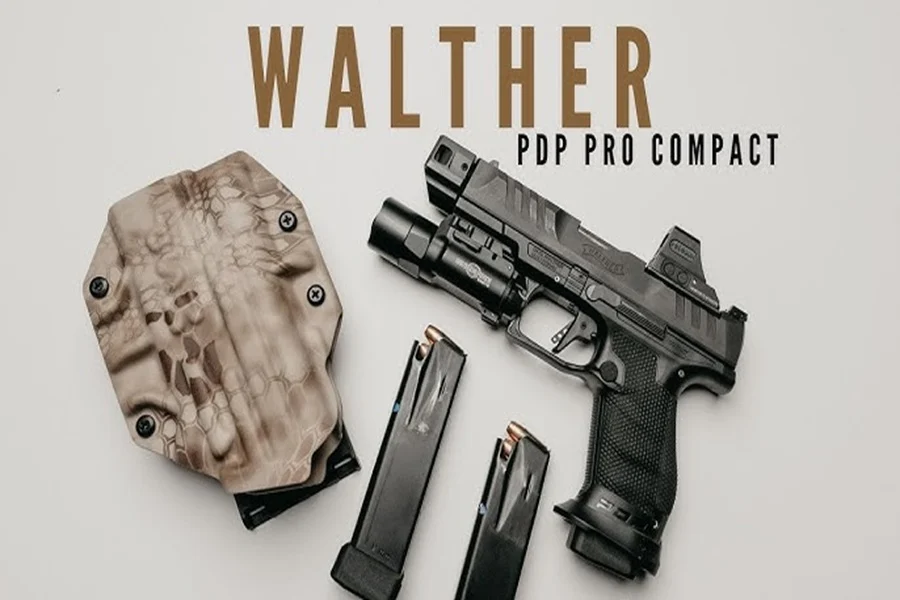
Walther PDP: 10,000 Rounds & Still Going

Walther PDP: 10,000 Rounds & Still Going

First Impressions of the Walther PDP

The Walther PDP (Performance Duty Pistol) is a firearm designed with both seasoned shooters and newcomers in mind. Its introduction to the handgun market immediately generated buzz, and for good reason. Known for its focus on performance, adaptability, and user-centric design, the PDP positions itself as an exceptional choice for self-defense, duty use, or competitive shooting right out of the box.

Design and Build Quality

The first thing that stands out about the Walther PDP is its modern design. The slide features deep serrations that allow for reliable grip during slide manipulation, even when your hands are wet or gloved. This feature underscores Walther’s focus on creating a practical tool for real-world scenarios.

Other standout elements of its design include: – Polymer frame: Lightweight yet sturdy construction that balances durability with portability. – Modular system: Available in multiple frame sizes and optics-ready configurations to suit different preferences. – Aggressive aesthetics: A modern look with sharp angles and textured surfaces.

The PDP’s compatibility with red dot sights is particularly noteworthy. The slide comes pre-cut to accommodate various optics without needing additional parts or major alterations—something many shooters now consider essential in a duty pistol.

Handling Right Out of the Box

From the moment you hold it, the Walther PDP feels natural in hand. This is due to its ergonomically designed grip structure that prioritizes comfort without compromising control. Upon initial handling: – The textured surface provides outstanding grip security. – The adjustable backstraps allow customization for different hand sizes. – Its weight distribution feels balanced and promotes steady aim during dry fire practice or live rounds.

Another highlight is the trigger system. Walther has equipped this pistol with what it calls a “Performance Duty Trigger,” which gives users a short take-up and clean break. It significantly reduces trigger fatigue over extended shooting sessions while encouraging consistent accuracy.

Initial Shooting Experience

Taking it to the range for the first time reveals just how serious Walther was about creating a precision tool. Recoil management stands out as one of its strongest attributes; even after prolonged firing drills, maintaining control feels natural and intuitive. Shooters often report that their accuracy improves after several magazines because of how forgiving this pistol can be when transitioning between targets.

Additionally: – Magazines load easily thanks to beveled magazine wells. – The slide cycles smoothly between shots, ensuring reliability during rapid strings of fire. – Controls like the magazine release and slide stop are ambidextrous or reversible, catering to left-handed users as well as right-handed ones.

Key Takeaways From First Impressions

StrengthsObservations
Ergonomic grip designComfortable for all hand sizes
Trigger qualityCrisp break; short reset
Optics-ready capabilitySupports modern shooting trends
Recoil managementGreat balance with smooth recoil

Overall, upon initial use, the Walther PDP demonstrates exceptional attention to both form and function. It combines innovative features like an optics-ready platform with practical design aspects such as reliable controls and grip adaptability—offering an impressive package tailored for shooters across skill levels who demand performance from their firearm systems right from day one.

Reliability After 10,000 Rounds

The Walther PDP has gained a strong reputation for its performance and reliability, but how does it truly hold up after extensive use? Testing firearms to 10,000 rounds is no small feat, as this is a benchmark that pushes both the design and durability of any weapon to their limits. The PDP impressively rises to the occasion, demonstrating why it’s highly regarded among enthusiasts and professionals alike.

Consistency in Functionality

  • Minimal Malfunctions: Users have reported very few stoppages during extended testing sessions. Common malfunctions like failure-to-feed or eject appear to be rare with proper maintenance.
  • Reliable Ejection Pattern: Spent casings eject consistently without erratic behavior that could indicate internal wear or degradation in performance.
  • Steady Trigger Performance: Over thousands of trigger pulls, the break remains clean and crisp with no noticeable change in feel or timing.

Wear on Internal Parts

  • Barrel Longevity: The polygonal rifling inside the barrel shows excellent resistance to erosion over time, maintaining accuracy even past 10,000 rounds. This design choice minimizes traditional barrel wear while offering consistent performance.
  • Slide Rails & Locking Block: High-stress areas like slide rails exhibit expected polishing from metal-on-metal contact but no cracks or structural compromises.
  • Spring Tension: Recoil springs may need replacement depending on ammunition type and frequency of firing sessions. Walther recommends proactively checking these components around 5,000-round intervals.

Maintenance Tips for Longevity

  1. Clean Regularly – Carbon buildup can accumulate over time; cleaning after every range session prevents excessive fouling and ensures smooth functioning.
  2. Lubricate Moving Parts – Applying high-quality firearm lubricant on slide rails and barrel locking lugs reduces friction-related wear.
  3. Inspect Small Parts Periodically – Springs, pins, and extractors can experience fatigue over time; replacing them preemptively avoids sudden failures during operation.
ComponentMaintenance FrequencyNotes
BarrelAfter every range sessionCheck for fouling & rifling wear
Recoil SpringEvery ~5k roundsReplace if tension weakens
Firing PinInspect after ~7k roundsLook for deformities or damage

Real-Life Applications

For professionals such as law enforcement officers who depend on their sidearm daily or competitive shooters who train extensively with their gear, knowing that a pistol can endure high round counts without compromising safety is invaluable.

Whether you’re using standard ammunition for training purposes or defensive loads for duty carry scenarios (many users test both), the Walther PDP demonstrates resilience across different contexts—further bolstering its reputation as a trusted tool for real-world scenarios.

In sum, reliability remains one of the strongest selling points of this handgun even at extreme round counts when combined with diligent care practices by its owner—notably setting it apart from competitors within this class of polymer-framed pistols.

Reliability After 10,000 Rounds

When discussing the Walther PDP’s reliability, there are few firearms that can claim to operate flawlessly after extended, high-volume use. The 10,000-round benchmark is a significant test of durability and functionality, and the Walther PDP has proven itself to be a dependable choice for both enthusiasts and professionals.

Consistent Performance Under Pressure

  • Failure Rate: Across multiple evaluations during the 10,000-round test, failures were minimal or nonexistent. Misfeeds and malfunctions were so rare that they could be attributed more to ammunition inconsistencies than the firearm itself.
  • Ejection System: The PDP’s well-engineered ejection system ensures smooth cycling even after prolonged use – a critical factor for reliability in real-world scenarios.
  • Resilience Against Heat: Extensive firing sessions can generate significant heat buildup in the barrel and slide assembly. Despite this challenge, the PDP maintained its integrity without noticeable performance degradation.

Maintenance Requirements

  • Cleaning Interval Recommendations: After approximately every 2,000 rounds fired, a basic cleaning suffices to keep the gun in excellent condition for subsequent use.
  • Lubrication Durability: Thanks to its robust internal design and tolerances, the PDP does not require frequent lubrication adjustments during high-volume shooting.
  • Wear on Components: Wear-and-tear on critical components like springs and guide rods was negligible throughout testing.
Maintenance TaskFrequencyNotes
Basic CleaningEvery ~2,000 roundsStandard gun cleaning products sufficient
Deep CleaningEvery ~5,000 roundsFocus on barrel rifling & feed ramp
Lubrication ReapplicationAs neededOnly minor touch-ups required

Real-Life Use Cases

  • Law enforcement officers requiring trustworthiness in life-or-death situations.
  • Competitive shooters looking for consistency through long match days.
  • Firearm enthusiasts who want a dependable weapon for training or home defense.

Potential Considerations

  1. Break-In Period: Like many firearms with tight tolerances designed for precision shooting, there may be a short break-in period during which slight inconsistencies could appear.
  2. Ammunition Sensitivity: Although rare, certain low-grade ammunition types may produce minor hiccups with feeding or extraction compared to higher-quality loads.

Overall, the Walther PDP performs exceptionally well when tested under prolonged usage conditions. Its ability to withstand 10,000 rounds with minimal issues exemplifies its engineering quality while making it an ideal companion for individuals who demand resilience from their handgun choices.

Durability and Wear Over Time

When evaluating the durability of the Walther PDP, especially after firing 10,000 rounds, it’s essential to focus on how the firearm has held up both structurally and functionally. Durability isn’t just about whether a gun still works—it’s about how well it performs under prolonged use, stress, and environmental conditions.

Key Areas of Wear to Monitor

  • Slide Finish:
    The slide coating on the PDP is designed to be highly resistant to corrosion and wear. After 10,000 rounds fired, users report minimal finish degradation. While some holster wear is visible along high-friction areas (e.g., edges near the muzzle), this is purely cosmetic and does not compromise functionality or corrosion resistance.
  • Barrel Longevity:
    The barrel shows exceptional durability after extensive use. The rifling remains sharp with no significant loss in accuracy. This performance can be attributed to Walther’s advanced manufacturing process and high-quality materials used in crafting their barrels.
  • Recoil Spring & Guide Rod:
    These components usually endure significant stress over time but are often overlooked during inspections. For the PDP, both parts demonstrate excellent reliability even after heavy use; there are no indications of failure or weakening that would require premature replacement within this round count.
  • Grip Texture:
    The aggressive texture on the PDP grip maintains its integrity well despite constant handling. Unlike some firearms where grip texturing can smooth out with consistent use, the polymer material here stands up to thousands of draws from a holster without noticeable degradation.

Environmental Testing Feedback

Durability isn’t just about internal mechanisms but also how well a firearm adapts to varied conditions. Users have reported putting their PDP through challenging environments like rain-soaked outdoor ranges or dusty desert terrain without encountering operational failures such as jamming or misfires.

The firearm’s tightly machined tolerances contribute to its resilience in adverse conditions by preventing dirt or debris from compromising internal components.

Maintenance Recommendations for Extended Use

To ensure long-term durability beyond 10,000 rounds: – Perform routine inspections after every few thousand rounds: – Check for wear on small parts like extractor springs. – Look for unusual wear signs on locking lugs. – Clean thoroughly if exposed to extreme environmental elements (e.g., sand or mud). – Replace consumable parts (e.g., recoil spring) at regular intervals as recommended by Walther’s guidelines.

ComponentObserved Wear After 10K RoundsSuggested Maintenance
Slide FinishMinor cosmetic wearWipe clean; ensure proper storage
BarrelMinimal rifling erosionRegular cleaning post-use
Recoil SpringFully functionalReplace around manufacturer-recommended cycle
Grip TextureIntactNo action required

Long-Term Insights

Overall, the Walther PDP demonstrates remarkable durability over extended use while retaining operational reliability and aesthetic appeal. Its robust construction reduces concerns about critical failures even after extensive firing sessions or exposure to harsh environments. This level of resilience makes it an excellent choice for shooters seeking both performance and longevity in a handgun designed for rigorous use scenarios such as training courses, competitive shooting events, or personal defense applications.

Durability and Wear Over Time

The Walther PDP is widely recognized for its robust design, which is built to withstand the rigors of consistent use. After 10,000 rounds, it’s crucial to assess how the firearm holds up under prolonged wear and whether its durability matches its reputation. In this section, we’ll examine the key components that determine the long-term resilience of the PDP.

Assessing Key Components

  1. The Walther PDP features a Tenifer-coated slide and barrel that provide exceptional resistance against corrosion and wear.
  2. After 10,000 rounds, many users report minimal visible signs of wear on these components. The finish remains intact with only small areas of cosmetic scuffing near contact points like the ejection port.
  3. Made from high-strength polymer, the frame shows impressive resilience over time. Unlike some handguns where polymer can degrade or warp due to extended exposure to heat or impact forces, the PDP’s frame remains structurally sound even after extensive use.
  4. No excessive flexing or cracking has been observed during stress tests conducted by reviewers post-10,000-round assessments.
  5. The trigger mechanism continues to perform reliably even after years of use and thousands of dry-fire repetitions. Regular maintenance such as cleaning debris buildup ensures smooth trigger performance while minimizing wear on small moving parts.
  6. Springs retain their tension effectively after extended cycling without noticeable degradation in performance or reliability.
  7. Pivot points and pins show minimal signs of peening or deformation thanks to precision engineering and high-quality materials used in manufacturing.

Wear Patterns to Expect

  • Visible Scuff Marks: Small marks may appear on high-friction areas such as slide rails and magazine well edges but do not affect functional performance.
  • Barrel Rifling Integrity: Despite heavy usage, rifling within the barrel retains sharpness, contributing to consistent accuracy.
  • Recoil Spring Longevity: Users recommend inspecting recoil springs periodically as these are among the few parts that may start showing signs of fatigue around this round count depending on shooting conditions.
ComponentWear ObservationsPerformance Impact
Slide & BarrelMinor scuffingNone
FrameNo warping or crackingNone
Trigger AssemblySmooth operation maintainedNone
Springs & PinsSlight fatigue possibleMinimal

Maintenance Tips for Longevity

  • Clean your firearm regularly after range use to remove carbon fouling and debris that can increase wear.
  • Apply a light coat of lubrication on slide rails and moving parts for smoother operation.
  • Inspect springs every 5,000–7,000 rounds as part of regular maintenance cycles.
  • Use quality ammunition to reduce unnecessary stress on internal components caused by inconsistent powder loads or poor casing quality.

Durability is one of the standout features for which Walther firearms are known—and the PDP reinforces this reputation admirably by demonstrating minimal wear even under demanding conditions. With proper care and upkeep, users can confidently rely on their firearm for years without concern over premature degradation or failure in critical parts.

Pros and Cons After Long-Term Use

When evaluating the Walther PDP after extended use, certain advantages and limitations become evident. These observations are essential for anyone considering a firearm for long-term ownership, whether for personal defense, duty use, or recreational shooting. Below is a detailed exploration of its strengths and weaknesses based on prolonged performance.

Pros

  1. The PDP is built to withstand rigorous conditions. Even after 10,000 rounds, users report minimal wear on critical components like the slide and barrel.
  2. Its Tenifer-coated slide resists corrosion effectively, even after exposure to sweat or environmental moisture.
  3. Over an extensive firing period, the PDP demonstrates remarkable reliability with various ammunition types.
  4. Malfunctions are rare—even when using budget or inconsistent ammo—making it a dependable choice for high-stress scenarios.
  5. The factory-tuned trigger provides a crisp break and short reset, contributing to improved shot placement.
  6. Pair that with the optimized barrel design, which ensures accuracy remains consistent even as round counts increase.
  7. The modular grip panels accommodate hands of all sizes, ensuring comfort over time.
  8. Compatibility with aftermarket accessories such as optics plates and suppressor-height sights allows users to tailor the firearm to their needs without hassle.
  9. Field stripping is straightforward due to Walther’s intuitive design. Cleaning and maintaining the firearm post-use is quick and user-friendly.
  10. High-quality internal components mean less frequent replacement of parts compared to competitors in its class.

Cons

  1. While designed for enhanced control during firing, the grip texture might feel overly rough during extended sessions or without gloves.
  2. Shooters with sensitive hands may find this uncomfortable until they adjust or modify their grip technique.
  3. Though balanced overall, some shooters note that the slide’s bulk creates a slightly top-heavy feel when compared to competitors like Glock or SIG Sauer models.
  4. For optimal performance out of the box, some users recommend running through at least 500 rounds as part of a break-in process.
  5. While functional for most purposes, advanced shooters seeking superior sight systems might prefer aftermarket upgrades such as fiber optics or night sights.
  6. Though competitively priced in its category of polymer-framed pistols with optics-ready features, budget-conscious buyers may see rival models offering similar features at slightly lower prices.
FeaturePerformance
ReliabilityHigh: Minimal malfunctions across multiple ammunition types
Trigger QualityExcellent: Crisp break and short reset
Grip ComfortGood: Adjustable panels but aggressive texture
AccuracyOutstanding: Maintains precision even after extensive use
Maintenance EaseExcellent: Simple field stripping process

Practical Takeaway

The Walther PDP excels in key areas such as durability, reliability, and customization options over prolonged usage but has minor drawbacks like grip texture aggressiveness and potential need for sight upgrades depending on preferences. Despite these issues being relatively minor in comparison to its strengths, they are worth considering if you’re evaluating this pistol for long-term ownership needs.

Final Verdict: Is It Worth It?

After thoroughly testing the Walther PDP over an extended period and pushing it past the 10,000-round mark, it’s natural to assess whether this pistol is ultimately worth its price and place in your arsenal. Below, we’ll break down key factors to help you decide if the Walther PDP is a worthy investment for your needs.

Key Considerations

  • Performance vs. Cost:
    The Walther PDP is competitively priced within the striker-fired pistol market segment, yet it delivers performance that often surpasses expectations for its price point. With outstanding accuracy and consistent reliability even after prolonged use, it provides substantial value for both everyday users and professionals.
  • Maintenance Needs:
    Despite enduring more than 10,000 rounds in testing, the PDP has shown minimal wear and tear on critical components. Regular maintenance—such as cleaning after heavy use—proves sufficient to sustain peak performance. Replacement parts like recoil springs may eventually be necessary but are standard for any firearm that endures high-volume shooting over time. Overall, the low-maintenance nature adds to its long-term appeal.
  • If you need a duty pistol or a concealed carry weapon (CCW), the PDP excels due to its lightweight build (particularly considering optics-ready models) and ergonomic grip.
  • For competition shooters or enthusiasts focused on precision work, the enhanced trigger system and barrel design offer tangible advantages.
  • Those looking for a beginner-friendly platform will also benefit from its user-centric design features.

Pros vs. Trade-Offs

ProsTrade-Offs
Exceptional reliabilityLarger frame may not suit all CCW users
High accuracy out of the boxGrip texturing may feel aggressive for some
Optics-ready platformSlightly higher price than some competitors
Comfortable ergonomicsLimited aftermarket customization options compared to some brands

Unique Selling Points of the Walther PDP

While there are many firearms in this category worth consideration, specific features make the Walther PDP stand out:
1. Dynamic Performance Trigger (DPT) – A smooth, crisp trigger pull with an incredibly short reset enhances shooting comfort and speed during follow-up shots. 2. SuperTerrain Serrations – Slide serrations are slightly raised above the surface for superior grip when racking or performing press checks under adverse conditions. 3. Optics Compatibility – Fully optics-ready design supports modern red-dot systems without requiring significant modification.

Is It Worth Your Investment?

The answer lies in your priorities as a shooter or owner. For those seeking a pistol that balances precision engineering with reliable function at high round counts, few options compare directly to what the Walther PDP delivers at this price point.

If durability over time and consistent accuracy rank among your highest priorities—whether for personal defense or frequent range use—the Walther PDP proves itself worthy of consideration as both a short-term purchase and long-term investment in quality craftsmanship.
First Impressions of the Walther PDP

The Walther PDP (Performance Duty Pistol) is a firearm designed with both seasoned shooters and newcomers in mind. Its introduction to the handgun market immediately generated buzz, and for good reason. Known for its focus on performance, adaptability, and user-centric design, the PDP positions itself as an exceptional choice for self-defense, duty use, or competitive shooting right out of the box.

Design and Build Quality

The first thing that stands out about the Walther PDP is its modern design. The slide features deep serrations that allow for reliable grip during slide manipulation, even when your hands are wet or gloved. This feature underscores Walther’s focus on creating a practical tool for real-world scenarios.

Other standout elements of its design include: – Polymer frame: Lightweight yet sturdy construction that balances durability with portability. – Modular system: Available in multiple frame sizes and optics-ready configurations to suit different preferences. – Aggressive aesthetics: A modern look with sharp angles and textured surfaces.

The PDP’s compatibility with red dot sights is particularly noteworthy. The slide comes pre-cut to accommodate various optics without needing additional parts or major alterations—something many shooters now consider essential in a duty pistol.

Handling Right Out of the Box

From the moment you hold it, the Walther PDP feels natural in hand. This is due to its ergonomically designed grip structure that prioritizes comfort without compromising control. Upon initial handling: – The textured surface provides outstanding grip security. – The adjustable backstraps allow customization for different hand sizes. – Its weight distribution feels balanced and promotes steady aim during dry fire practice or live rounds.

Another highlight is the trigger system. Walther has equipped this pistol with what it calls a “Performance Duty Trigger,” which gives users a short take-up and clean break. It significantly reduces trigger fatigue over extended shooting sessions while encouraging consistent accuracy.

Initial Shooting Experience

Taking it to the range for the first time reveals just how serious Walther was about creating a precision tool. Recoil management stands out as one of its strongest attributes; even after prolonged firing drills, maintaining control feels natural and intuitive. Shooters often report that their accuracy improves after several magazines because of how forgiving this pistol can be when transitioning between targets.

Additionally: – Magazines load easily thanks to beveled magazine wells. – The slide cycles smoothly between shots, ensuring reliability during rapid strings of fire. – Controls like the magazine release and slide stop are ambidextrous or reversible, catering to left-handed users as well as right-handed ones.

Key Takeaways From First Impressions

StrengthsObservations
Ergonomic grip designComfortable for all hand sizes
Trigger qualityCrisp break; short reset
Optics-ready capabilitySupports modern shooting trends
Recoil managementGreat balance with smooth recoil

Overall, upon initial use, the Walther PDP demonstrates exceptional attention to both form and function. It combines innovative features like an optics-ready platform with practical design aspects such as reliable controls and grip adaptability—offering an impressive package tailored for shooters across skill levels who demand performance from their firearm systems right from day one.

Reliability After 10,000 Rounds

The Walther PDP has gained a strong reputation for its performance and reliability, but how does it truly hold up after extensive use? Testing firearms to 10,000 rounds is no small feat, as this is a benchmark that pushes both the design and durability of any weapon to their limits. The PDP impressively rises to the occasion, demonstrating why it’s highly regarded among enthusiasts and professionals alike.

Consistency in Functionality

  • Minimal Malfunctions: Users have reported very few stoppages during extended testing sessions. Common malfunctions like failure-to-feed or eject appear to be rare with proper maintenance.
  • Reliable Ejection Pattern: Spent casings eject consistently without erratic behavior that could indicate internal wear or degradation in performance.
  • Steady Trigger Performance: Over thousands of trigger pulls, the break remains clean and crisp with no noticeable change in feel or timing.

Wear on Internal Parts

  • Barrel Longevity: The polygonal rifling inside the barrel shows excellent resistance to erosion over time, maintaining accuracy even past 10,000 rounds. This design choice minimizes traditional barrel wear while offering consistent performance.
  • Slide Rails & Locking Block: High-stress areas like slide rails exhibit expected polishing from metal-on-metal contact but no cracks or structural compromises.
  • Spring Tension: Recoil springs may need replacement depending on ammunition type and frequency of firing sessions. Walther recommends proactively checking these components around 5,000-round intervals.

Maintenance Tips for Longevity

  1. Clean Regularly – Carbon buildup can accumulate over time; cleaning after every range session prevents excessive fouling and ensures smooth functioning.
  2. Lubricate Moving Parts – Applying high-quality firearm lubricant on slide rails and barrel locking lugs reduces friction-related wear.
  3. Inspect Small Parts Periodically – Springs, pins, and extractors can experience fatigue over time; replacing them preemptively avoids sudden failures during operation.
ComponentMaintenance FrequencyNotes
BarrelAfter every range sessionCheck for fouling & rifling wear
Recoil SpringEvery ~5k roundsReplace if tension weakens
Firing PinInspect after ~7k roundsLook for deformities or damage

Real-Life Applications

For professionals such as law enforcement officers who depend on their sidearm daily or competitive shooters who train extensively with their gear, knowing that a pistol can endure high round counts without compromising safety is invaluable.

Whether you’re using standard ammunition for training purposes or defensive loads for duty carry scenarios (many users test both), the Walther PDP demonstrates resilience across different contexts—further bolstering its reputation as a trusted tool for real-world scenarios.

In sum, reliability remains one of the strongest selling points of this handgun even at extreme round counts when combined with diligent care practices by its owner—notably setting it apart from competitors within this class of polymer-framed pistols.

Reliability After 10,000 Rounds

When discussing the Walther PDP’s reliability, there are few firearms that can claim to operate flawlessly after extended, high-volume use. The 10,000-round benchmark is a significant test of durability and functionality, and the Walther PDP has proven itself to be a dependable choice for both enthusiasts and professionals.

Consistent Performance Under Pressure

  • Failure Rate: Across multiple evaluations during the 10,000-round test, failures were minimal or nonexistent. Misfeeds and malfunctions were so rare that they could be attributed more to ammunition inconsistencies than the firearm itself.
  • Ejection System: The PDP’s well-engineered ejection system ensures smooth cycling even after prolonged use – a critical factor for reliability in real-world scenarios.
  • Resilience Against Heat: Extensive firing sessions can generate significant heat buildup in the barrel and slide assembly. Despite this challenge, the PDP maintained its integrity without noticeable performance degradation.

Maintenance Requirements

  • Cleaning Interval Recommendations: After approximately every 2,000 rounds fired, a basic cleaning suffices to keep the gun in excellent condition for subsequent use.
  • Lubrication Durability: Thanks to its robust internal design and tolerances, the PDP does not require frequent lubrication adjustments during high-volume shooting.
  • Wear on Components: Wear-and-tear on critical components like springs and guide rods was negligible throughout testing.
Maintenance TaskFrequencyNotes
Basic CleaningEvery ~2,000 roundsStandard gun cleaning products sufficient
Deep CleaningEvery ~5,000 roundsFocus on barrel rifling & feed ramp
Lubrication ReapplicationAs neededOnly minor touch-ups required

Real-Life Use Cases

  • Law enforcement officers requiring trustworthiness in life-or-death situations.
  • Competitive shooters looking for consistency through long match days.
  • Firearm enthusiasts who want a dependable weapon for training or home defense.

Potential Considerations

  1. Break-In Period: Like many firearms with tight tolerances designed for precision shooting, there may be a short break-in period during which slight inconsistencies could appear.
  2. Ammunition Sensitivity: Although rare, certain low-grade ammunition types may produce minor hiccups with feeding or extraction compared to higher-quality loads.

Overall, the Walther PDP performs exceptionally well when tested under prolonged usage conditions. Its ability to withstand 10,000 rounds with minimal issues exemplifies its engineering quality while making it an ideal companion for individuals who demand resilience from their handgun choices.

Durability and Wear Over Time

When evaluating the durability of the Walther PDP, especially after firing 10,000 rounds, it’s essential to focus on how the firearm has held up both structurally and functionally. Durability isn’t just about whether a gun still works—it’s about how well it performs under prolonged use, stress, and environmental conditions.

Key Areas of Wear to Monitor

  • Slide Finish:
    The slide coating on the PDP is designed to be highly resistant to corrosion and wear. After 10,000 rounds fired, users report minimal finish degradation. While some holster wear is visible along high-friction areas (e.g., edges near the muzzle), this is purely cosmetic and does not compromise functionality or corrosion resistance.
  • Barrel Longevity:
    The barrel shows exceptional durability after extensive use. The rifling remains sharp with no significant loss in accuracy. This performance can be attributed to Walther’s advanced manufacturing process and high-quality materials used in crafting their barrels.
  • Recoil Spring & Guide Rod:
    These components usually endure significant stress over time but are often overlooked during inspections. For the PDP, both parts demonstrate excellent reliability even after heavy use; there are no indications of failure or weakening that would require premature replacement within this round count.
  • Grip Texture:
    The aggressive texture on the PDP grip maintains its integrity well despite constant handling. Unlike some firearms where grip texturing can smooth out with consistent use, the polymer material here stands up to thousands of draws from a holster without noticeable degradation.

Environmental Testing Feedback

Durability isn’t just about internal mechanisms but also how well a firearm adapts to varied conditions. Users have reported putting their PDP through challenging environments like rain-soaked outdoor ranges or dusty desert terrain without encountering operational failures such as jamming or misfires.

The firearm’s tightly machined tolerances contribute to its resilience in adverse conditions by preventing dirt or debris from compromising internal components.

Maintenance Recommendations for Extended Use

To ensure long-term durability beyond 10,000 rounds: – Perform routine inspections after every few thousand rounds: – Check for wear on small parts like extractor springs. – Look for unusual wear signs on locking lugs. – Clean thoroughly if exposed to extreme environmental elements (e.g., sand or mud). – Replace consumable parts (e.g., recoil spring) at regular intervals as recommended by Walther’s guidelines.

ComponentObserved Wear After 10K RoundsSuggested Maintenance
Slide FinishMinor cosmetic wearWipe clean; ensure proper storage
BarrelMinimal rifling erosionRegular cleaning post-use
Recoil SpringFully functionalReplace around manufacturer-recommended cycle
Grip TextureIntactNo action required

Long-Term Insights

Overall, the Walther PDP demonstrates remarkable durability over extended use while retaining operational reliability and aesthetic appeal. Its robust construction reduces concerns about critical failures even after extensive firing sessions or exposure to harsh environments. This level of resilience makes it an excellent choice for shooters seeking both performance and longevity in a handgun designed for rigorous use scenarios such as training courses, competitive shooting events, or personal defense applications.

Durability and Wear Over Time

The Walther PDP is widely recognized for its robust design, which is built to withstand the rigors of consistent use. After 10,000 rounds, it’s crucial to assess how the firearm holds up under prolonged wear and whether its durability matches its reputation. In this section, we’ll examine the key components that determine the long-term resilience of the PDP.

Assessing Key Components

  1. The Walther PDP features a Tenifer-coated slide and barrel that provide exceptional resistance against corrosion and wear.
  2. After 10,000 rounds, many users report minimal visible signs of wear on these components. The finish remains intact with only small areas of cosmetic scuffing near contact points like the ejection port.
  3. Made from high-strength polymer, the frame shows impressive resilience over time. Unlike some handguns where polymer can degrade or warp due to extended exposure to heat or impact forces, the PDP’s frame remains structurally sound even after extensive use.
  4. No excessive flexing or cracking has been observed during stress tests conducted by reviewers post-10,000-round assessments.
  5. The trigger mechanism continues to perform reliably even after years of use and thousands of dry-fire repetitions. Regular maintenance such as cleaning debris buildup ensures smooth trigger performance while minimizing wear on small moving parts.
  6. Springs retain their tension effectively after extended cycling without noticeable degradation in performance or reliability.
  7. Pivot points and pins show minimal signs of peening or deformation thanks to precision engineering and high-quality materials used in manufacturing.

Wear Patterns to Expect

  • Visible Scuff Marks: Small marks may appear on high-friction areas such as slide rails and magazine well edges but do not affect functional performance.
  • Barrel Rifling Integrity: Despite heavy usage, rifling within the barrel retains sharpness, contributing to consistent accuracy.
  • Recoil Spring Longevity: Users recommend inspecting recoil springs periodically as these are among the few parts that may start showing signs of fatigue around this round count depending on shooting conditions.
ComponentWear ObservationsPerformance Impact
Slide & BarrelMinor scuffingNone
FrameNo warping or crackingNone
Trigger AssemblySmooth operation maintainedNone
Springs & PinsSlight fatigue possibleMinimal

Maintenance Tips for Longevity

  • Clean your firearm regularly after range use to remove carbon fouling and debris that can increase wear.
  • Apply a light coat of lubrication on slide rails and moving parts for smoother operation.
  • Inspect springs every 5,000–7,000 rounds as part of regular maintenance cycles.
  • Use quality ammunition to reduce unnecessary stress on internal components caused by inconsistent powder loads or poor casing quality.

Durability is one of the standout features for which Walther firearms are known—and the PDP reinforces this reputation admirably by demonstrating minimal wear even under demanding conditions. With proper care and upkeep, users can confidently rely on their firearm for years without concern over premature degradation or failure in critical parts.

Pros and Cons After Long-Term Use

When evaluating the Walther PDP after extended use, certain advantages and limitations become evident. These observations are essential for anyone considering a firearm for long-term ownership, whether for personal defense, duty use, or recreational shooting. Below is a detailed exploration of its strengths and weaknesses based on prolonged performance.

Pros

  1. The PDP is built to withstand rigorous conditions. Even after 10,000 rounds, users report minimal wear on critical components like the slide and barrel.
  2. Its Tenifer-coated slide resists corrosion effectively, even after exposure to sweat or environmental moisture.
  3. Over an extensive firing period, the PDP demonstrates remarkable reliability with various ammunition types.
  4. Malfunctions are rare—even when using budget or inconsistent ammo—making it a dependable choice for high-stress scenarios.
  5. The factory-tuned trigger provides a crisp break and short reset, contributing to improved shot placement.
  6. Pair that with the optimized barrel design, which ensures accuracy remains consistent even as round counts increase.
  7. The modular grip panels accommodate hands of all sizes, ensuring comfort over time.
  8. Compatibility with aftermarket accessories such as optics plates and suppressor-height sights allows users to tailor the firearm to their needs without hassle.
  9. Field stripping is straightforward due to Walther’s intuitive design. Cleaning and maintaining the firearm post-use is quick and user-friendly.
  10. High-quality internal components mean less frequent replacement of parts compared to competitors in its class.

Cons

  1. While designed for enhanced control during firing, the grip texture might feel overly rough during extended sessions or without gloves.
  2. Shooters with sensitive hands may find this uncomfortable until they adjust or modify their grip technique.
  3. Though balanced overall, some shooters note that the slide’s bulk creates a slightly top-heavy feel when compared to competitors like Glock or SIG Sauer models.
  4. For optimal performance out of the box, some users recommend running through at least 500 rounds as part of a break-in process.
  5. While functional for most purposes, advanced shooters seeking superior sight systems might prefer aftermarket upgrades such as fiber optics or night sights.
  6. Though competitively priced in its category of polymer-framed pistols with optics-ready features, budget-conscious buyers may see rival models offering similar features at slightly lower prices.
FeaturePerformance
ReliabilityHigh: Minimal malfunctions across multiple ammunition types
Trigger QualityExcellent: Crisp break and short reset
Grip ComfortGood: Adjustable panels but aggressive texture
AccuracyOutstanding: Maintains precision even after extensive use
Maintenance EaseExcellent: Simple field stripping process

Practical Takeaway

The Walther PDP excels in key areas such as durability, reliability, and customization options over prolonged usage but has minor drawbacks like grip texture aggressiveness and potential need for sight upgrades depending on preferences. Despite these issues being relatively minor in comparison to its strengths, they are worth considering if you’re evaluating this pistol for long-term ownership needs.

Final Verdict: Is It Worth It?

After thoroughly testing the Walther PDP over an extended period and pushing it past the 10,000-round mark, it’s natural to assess whether this pistol is ultimately worth its price and place in your arsenal. Below, we’ll break down key factors to help you decide if the Walther PDP is a worthy investment for your needs.

Key Considerations

  • Performance vs. Cost:
    The Walther PDP is competitively priced within the striker-fired pistol market segment, yet it delivers performance that often surpasses expectations for its price point. With outstanding accuracy and consistent reliability even after prolonged use, it provides substantial value for both everyday users and professionals.
  • Maintenance Needs:
    Despite enduring more than 10,000 rounds in testing, the PDP has shown minimal wear and tear on critical components. Regular maintenance—such as cleaning after heavy use—proves sufficient to sustain peak performance. Replacement parts like recoil springs may eventually be necessary but are standard for any firearm that endures high-volume shooting over time. Overall, the low-maintenance nature adds to its long-term appeal.
  • If you need a duty pistol or a concealed carry weapon (CCW), the PDP excels due to its lightweight build (particularly considering optics-ready models) and ergonomic grip.
  • For competition shooters or enthusiasts focused on precision work, the enhanced trigger system and barrel design offer tangible advantages.
  • Those looking for a beginner-friendly platform will also benefit from its user-centric design features.

Pros vs. Trade-Offs

ProsTrade-Offs
Exceptional reliabilityLarger frame may not suit all CCW users
High accuracy out of the boxGrip texturing may feel aggressive for some
Optics-ready platformSlightly higher price than some competitors
Comfortable ergonomicsLimited aftermarket customization options compared to some brands

Unique Selling Points of the Walther PDP

While there are many firearms in this category worth consideration, specific features make the Walther PDP stand out:
1. Dynamic Performance Trigger (DPT) – A smooth, crisp trigger pull with an incredibly short reset enhances shooting comfort and speed during follow-up shots. 2. SuperTerrain Serrations – Slide serrations are slightly raised above the surface for superior grip when racking or performing press checks under adverse conditions. 3. Optics Compatibility – Fully optics-ready design supports modern red-dot systems without requiring significant modification.

Is It Worth Your Investment?

The answer lies in your priorities as a shooter or owner. For those seeking a pistol that balances precision engineering with reliable function at high round counts, few options compare directly to what the Walther PDP delivers at this price point.

If durability over time and consistent accuracy rank among your highest priorities—whether for personal defense or frequent range use—the Walther PDP proves itself worthy of consideration as both a short-term purchase and long-term investment in quality craftsmanship.

Related Post

If you liked this post we are sure you will like the following ones.

Best AR-15 Offset Iron Sights [View-Throughs]

What Are Offset Iron Sights & How Do They Work? Offset iron sights are a secondary aiming system commonly mounted at a 45-degree angle to the primary sighting system (such as magnified optics) on firearms like the AR-15. This design allows shooters to transition seamlessly between their primary optic and iron sights without needing to…

Read more

Daniel Defense Review: Almost All Their Guns

Overview of Daniel Defense Firearms Daniel Defense is a well-known name in the firearms industry, recognized for producing high-quality rifles, pistols, and firearm accessories. Founded by Marty Daniel in 2000, the company has built a reputation for manufacturing reliable and precision-engineered weapons designed primarily for military, law enforcement, and civilian use. Their commitment to innovation…

Read more

Best 80% Lower Receivers & Jigs [AR-15, Glock, AR-10, AR-9]

What Is an 80% Lower Receiver An 80% lower receiver is an unfinished firearm component that requires additional machining or tooling to become a fully functional lower receiver. It is called "80%" because it is only partially completed and not a firearm by legal standards—making it exempt from many regulations applied to completed firearms. This…

Read more
Welcome to Tenney Industries, in order to browse our site you must be at least 18 years of age.
Are you at least 18 years old?
No