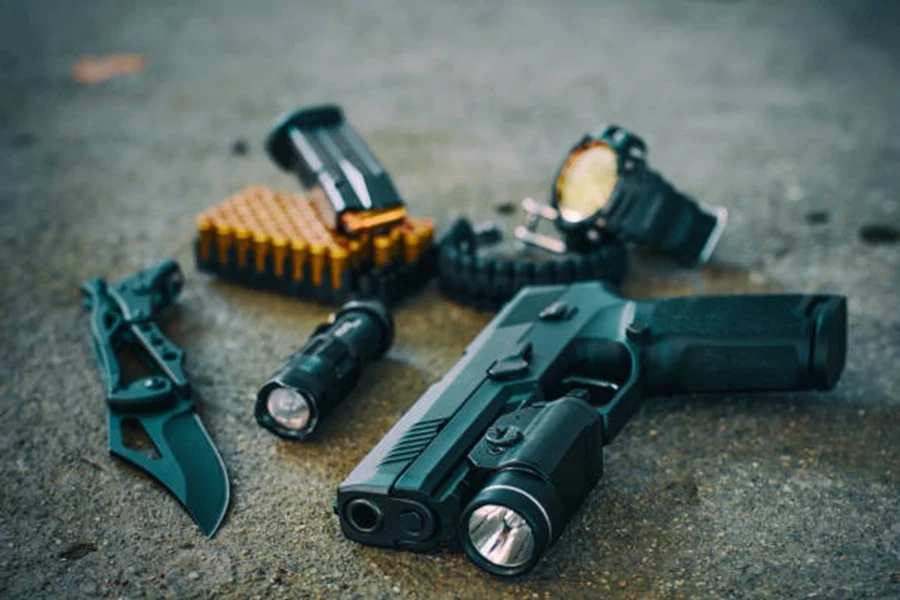
8 Best Pistol Lights [Hands-On Review]

8 Best Pistol Lights [Hands-On Review]

Pistol Light Comparison Chart

When searching for the best pistol lights, understanding the key specifications and features is essential. A comparison chart provides a quick and efficient way to evaluate various options based on their performance, dimensions, weight, output, runtime, and additional features. Below is an example of what to consider when comparing pistol lights.

ModelLumensBeam DistanceRuntimeWeight (oz)Mounting TypeSpecial Features
Streamlight TLR-1 HL1,000245 meters1.5 hours4.18UniversalWaterproof, durable construction
Olight PL-Mini 2600100 meters1 hour (rechargeable)2.57Magnetic Quick Release
SureFire X300 Ultra1,000213 meters1.25 hours4.0Picatinny RailAmbidextrous controls
InForce APLc200N/AUp to 90 mins (constant mode) 3.08 Compact Design for concealed pistols

Key Metrics To Consider:

  • Lumens: Measures the brightness of the light. Higher lumens provide intense illumination but may reduce battery life.
  • Beam Distance: Indicates how far the light travels effectively — ideal for tactical or outdoor settings.
  • BatteryLife runtime EX

How We Chose The Best Pistol Lights

Selecting the best pistol lights required a meticulous process to ensure the recommendations cater to different needs, budgets, and preferences. Each product was evaluated based on a comprehensive set of criteria to determine its performance, reliability, and practicality for various users. Below is an overview of how we conducted our selection process.

1. Key Evaluation Criteria

  • A good pistol light needs to provide sufficient illumination for low-light scenarios. We considered models ranging from compact, lower-lumen options for indoor use to high-lumen tactical lights suitable for outdoor or professional applications.
  • The quality of the beam—whether it’s wide flood lighting or a focused spotlight—was carefully analyzed. We prioritized lights offering versatility in beam throw and clarity in identifying targets at various distances.
  • Longevity matters, particularly in high-stakes situations or extended use. Models with efficient energy management systems and long runtimes received higher marks during our evaluation process. Battery type (rechargeable vs disposable) was also a significant consideration.
  • Pistol lights must withstand recoil and harsh conditions without compromising performance. We tested for ruggedness by reviewing materials used (e.g., aircraft-grade aluminum) and IPX ratings that indicate water and dust resistance.
  • Compatibility with different firearm brands and models is crucial when choosing a pistol light. Lights that were easy to mount using universal rails or manufacturer-specific mounting systems scored well here.

2. Hands-On Testing Process

  • Indoor low-light testing on static targets.
  • Outdoor nighttime drills involving dynamic movement.
  • Stress tests including continuous firing sessions to observe whether the light could handle recoil over time without shifting alignment or malfunctioning.

3. User Feedback and Expert Insights

In addition to hands-on testing, we incorporated feedback from experienced firearm users such as law enforcement officers, military personnel, competitive shooters, and responsible concealed carry owners. Their insights provided valuable perspectives about real-world usability under diverse conditions.

4. Value for Money

Cost-effectiveness was another essential factor during our selection—balancing price with features such as build quality, brightness, functionality (e.g., strobe modes), and warranty coverage.

FeatureImportance LevelExample Considerations
BrightnessHighMinimum lumens needed for target visibility
DurabilityHighBuilt from shockproof/waterproof materials
Battery LifeMediumRechargeable vs replaceable battery option
Mounting EaseMediumTool-free setup or proprietary mounts

By using this thorough process combining objective testing with expert opinions, we feel confident that each recommended product meets high standards of functionality while catering to diverse user requirements in different settings like home defense or professional operations.

How We Chose The Best Pistol Lights

When it comes to selecting the best pistol lights, a clear and methodical process is essential. Given the variety of options available on the market today, it’s important to evaluate each product against specific criteria to ensure it meets the needs of different users. Below is a detailed breakdown of how we determined the top pistol lights for this article.

Key Factors Considered

  • Brightness (Lumens): Brightness is one of the most critical factors in a pistol light. We evaluated each light based on its lumen output and how effectively it illuminates targets at various ranges. A good balance between indoor and outdoor usability was taken into account.
  • Beam Distance & Pattern: The throw (beam distance) and pattern (flood vs. focused) were carefully analyzed to ensure versatility in tactical, recreational, or home-defense scenarios.
  • Durability: Pistol lights often face harsh conditions such as recoil impact, weather exposure, or rough handling. We prioritized models with high-quality materials like aircraft-grade aluminum and IPX-rated water resistance for durability.
  • Battery Life: Battery performance plays a vital role in how reliable a light is during prolonged use. Lights with extended battery life or rechargeable options received higher ratings during our review process.
  • Weight & Size: A bulky or excessively heavy light can affect firearm balance and handling. We selected compact models that align well with everyday carry (EDC) or tactical applications while ensuring they don’t add unnecessary bulk.
  • Ease of Use: Accessible controls such as intuitive switches or ambidextrous functionality were reviewed to accommodate different shooting preferences and hand sizes.
  • Mounting System: A secure yet user-friendly mounting system ensures compatibility with various pistols while allowing quick attachment/detachment when needed.

Testing Process

  1. Installation process on popular pistol models.
  2. Performance under stress conditions like rapid firing.
  3. Usability of additional features like strobe modes or laser integration.

Why User Feedback Matters

While technical specifications provide valuable insights, user feedback helps bridge the gap between advertised performance and real-world experience. For this reason, we also factored in reviews from verified buyers who regularly use these products across various applications—from law enforcement professionals to civilian firearm enthusiasts.

FactorImportance LevelExamples of What We Evaluated
BrightnessHighLumen output; target visibility
DurabilityHighMaterial strength; IPX rating
Weight & SizeMediumCompact design; firearm balance
Battery LifeHighRuntime duration; rechargeability
Mounting SystemMediumCompatibility with rails; ease of setup

Refining Our Selection

After narrowing down an initial list of over 20 models, we selected eight standout options based on their overall scores from testing and evaluation criteria above. These are lights that excel not only in technical specs but also in offering practical advantages for varied use cases.

By adhering to this comprehensive selection process, we’re confident that our recommendations represent some of the best options available today for anyone looking to upgrade their gear with a reliable pistol light solution tailored to their needs.

How to Pick the Best Pistol Lights

Choosing the right pistol light can seem daunting with so many options available, but by focusing on key features and practical considerations, you can narrow down your choices. Below, we’ll explore critical factors to keep in mind when selecting the best pistol light for your needs.

Key Factors to Consider

  1. Lumens: Lumens measure the total amount of visible light emitted by a light source. For close-quarters or indoor use, about 300-600 lumens is sufficient. For outdoor environments or long-range visibility, consider lights offering 800+ lumens.
  2. Candela: While lumens highlight overall brightness, candela measures beam intensity and throw distance. A higher candela rating ensures the beam will penetrate effectively over longer distances.
  3. Choose a light that fits your specific firearm model without causing balance issues or interfering with holsters.
  4. Compact models are ideal for concealed carry pistols where bulk is a concern.
  5. Verify compatibility with rail systems such as Picatinny or proprietary designs.
  6. Look for lights made from high-quality materials such as anodized aluminum or reinforced polymer for durability under recoil and harsh conditions.
  7. Ensure weatherproof or waterproof ratings (e.g., IPX6 or IPX7) for reliable performance in various environments.
  8. Opt for rechargeable lights (via USB) for convenience and cost savings over time.
  9. If choosing non-rechargeable models, consider those using CR123A batteries, as they offer excellent energy density.
  10. Check runtime specifications—longer runtimes mean fewer interruptions during extended use.
  11. Quick-detach systems allow rapid attachment/detachment without tools, which is particularly useful in tactical situations.
  12. Ensure the mounting system secures firmly to prevent wobbling during firing.
  13. Switch Options
    Different switches cater to different preferences:
    • Ambidextrous paddle-style switches are great for both right- and left-handed users.
    • Remote pressure pads provide convenient control when mounted on rifles or carbines.
    • Momentary vs. constant-on functionality allows flexibility based on tactical requirements.
  14. Beam Pattern & Color Temperature
    A tightly focused beam offers greater throw distance, while wider patterns work better indoors by illuminating larger areas. Neutral white light offers better color rendering than cooler blue-white beams in some cases.

Practical Tips

  • Test Before Buying: If possible, visit a store where you can mount various models to your firearm before purchase to ensure fitment and accessibility of controls.
  • Match Use Case with Features: Are you using it primarily for home defense? A wider floodlight beam may suffice indoors; however, if you’re outdoors frequently at night, prioritize extended throw distance and durability against environmental elements.
  • Budget Wisely: While premium brands offer advanced features like laser integration or programmable modes, there are budget-friendly options that balance reliability and performance without breaking the bank.

Sample Comparison Table

FeatureOption AOption BOption C
Lumens5001,000800
BatteryCR123ARechargeable USB-CCR123A
Runtime~2 hours~1 hour~2 hours
Beam FocusWide patternLong throwBalanced
Waterproof RatingIPX6IPX8IPX7

Use this framework to evaluate potential purchases side-by-side based on your needs.

By taking these factors into account, you’ll be well-equipped to select a pistol light that aligns perfectly with your requirements—whether it’s home defense readiness, range practice support, or tactical applications under demanding conditions.

How to Pick the Best Pistol Lights

Selecting the right pistol light can feel overwhelming with the sheer variety of options available. However, focusing on key factors will help you narrow down your choices and find a light that fits your needs. Here’s a comprehensive guide on how to pick the best pistol lights.

1. Brightness and Lumens

  • Home defense or general use: A lumen range of 300–800 is sufficient for most scenarios.
  • Outdoor or tactical operations: Lights with 800+ lumens are ideal for long-distance visibility.
  • Avoid excessively high-lumen lights for indoor use as they may create blinding reflections off walls.

2. Beam Pattern

  • Floodlight beam: Offers wide-angle illumination and is excellent for close-quarters or indoor environments.
  • Focused spotlight beam: Projects a narrow beam that works well over long distances outdoors.

Some high-end models even allow adjustable beams, providing flexibility across different situations.

3. Size and Weight

A proper balance between size and weight ensures that a pistol light won’t interfere with maneuverability or comfort during usage.

  • Compact, lightweight lights are better suited for concealed carry pistols.
  • Larger lights with extended features might fit better on full-size handguns or tactical firearms.

Pro tip: Always test whether the size of the light complements your firearm without hindering holstering or handling.

4. Battery Life and Power Source

Power SourceProsCons
RechargeableCost-efficient over time; convenientNeeds periodic charging
Disposable (CR123A)Easy to replace quickly; widely availableCan become expensive over time

If you opt for rechargeable models, check if they include features like USB-C charging ports for added convenience.

5. Mounting System

  • Verify if the mounting system aligns with your firearm’s rail configuration.
  • For universal compatibility, search for quick-detach (QD) mounts that secure easily without tools.

6. Durability and Build Quality

  • Look for materials like anodized aluminum or reinforced polymer.
  • Ensure it has an IPX rating (e.g., IPX7) to confirm water resistance during adverse weather conditions.

Many credible manufacturers subject their products to rigorous drop tests to ensure reliability, so prioritize well-reviewed brands over untested options.

7. Additional Features

  • Integrated lasers: Useful for target acquisition but not always necessary.
  • Strobe mode: Effective as a disorienting tool in self-defense situations.

While added features can be helpful, ensure they don’t complicate usability during stressful moments.

8. Budget Considerations

  • Affordable pistol lights (around $50–$100): Great entry-level options but may sacrifice advanced features like adjustable beams or longer battery life.
  • Mid-range ($100–$200): Strike an excellent balance between performance and price.
  • Premium ($200+): Offer cutting-edge technology with robust designs suited for professional use.

Remember, buying from reputable brands often ensures better customer support and warranty coverage compared to cheaper, unbranded products.

By focusing on these critical factors—brightness, size, mounting systems, durability—you can confidently choose a pistol light that meets both your practical needs and personal preferences without compromising quality.

Meet the Experts

Firearms Instructors

Firearms instructors bring years of experience in teaching safe handling and effective use of firearms. Their insights are invaluable for understanding how a pistol light performs in realistic training scenarios. Key considerations they highlighted include: – Ease of Operation: Is the light intuitive to use during high-stress situations?
– Ergonomic Design: Does the control mechanism work well with both gloved and ungloved hands?
– Durability: How does it hold up during regular training sessions where equipment can take a beating?

Instructors emphasized that a good pistol light should enhance performance without adding unnecessary complexity.

Law Enforcement Professionals

Law enforcement personnel rely on pistol lights for real-world applications where performance under pressure is critical. Their feedback helped us evaluate features such as:
– Light Intensity: Does the brightness level provide sufficient illumination for clearing buildings or identifying threats at night?
– Battery Life: Can it last through extended shifts or patrols without needing frequent replacements?
– Quick Detach Systems: How quickly can an officer attach or remove the light if needed during field operations?

Law enforcement officers appreciated models that combined reliability with practical features like strobe modes for disorienting threats.

Military Personnel

Military service members often operate in rugged environments where gear is tested to its limits. They provided valuable feedback on factors such as:
– Water Resistance: Can the light function reliably in wet conditions or after being submerged?
– Impact Resistance: Does it withstand drops, rough handling, and recoil from repeated firing?
– Compatibility with Tactical Gear: Can it seamlessly integrate with holsters and other accessories?

Their expertise ensured that we considered models built for durability under extreme conditions.

Industry Specialists

Experts from firearm accessory manufacturers and retailers offered insight into market trends, technological advancements, and customer preferences. They helped us understand:
– Which features are most sought after by consumers (e.g., lumens vs. beam distance).
– The pros and cons of various technologies (e.g., LED vs. incandescent bulbs).
– Emerging innovations like rechargeable batteries or modular mounting systems.

Their perspective also shed light on warranty policies and post-sale support offered by leading brands.

Key Takeaways From Experts

The collaborative input from these professionals allowed us to identify top-performing pistol lights tailored to a wide range of needs. Whether you’re a civilian gun owner looking for a reliable home defense option or a professional requiring tactical-grade performance, their combined expertise ensures this guide caters to every scenario. By leveraging their experience, we’ve selected models that balance quality, functionality, and value effectively.

Meet the Experts

When choosing the best pistol lights, it’s essential to consider insights from firearms experts and industry professionals. Their experience, technical knowledge, and hands-on testing offer valuable perspectives that can guide your decision-making process. Below, we share how expert evaluations contribute to identifying the top pistol lights for different needs.

Who Are the Experts?

  • Tactical Professionals: Military personnel, law enforcement officers, and private security professionals often rely on weapon-mounted lights during critical operations. Their feedback highlights durability, reliability, and performance under stress.
  • Firearms Instructors: These experts test a wide variety of equipment while training others. They can provide practical insights into ease of use, controls accessibility, and compatibility with different firearm platforms.
  • Gear Reviewers and Enthusiasts: Individuals who specialize in reviewing shooting accessories bring a broader perspective. They analyze technological advancements, value for money, and niche-specific features.
  • Competitive Shooters: Although competition shooting doesn’t always involve low-light conditions, some competitors test pistol lights for training scenarios or personal defense setups.

What Do They Evaluate?

CriteriaWhy It Matters
Brightness (Lumens)A high lumen output ensures visibility in low-light conditions while avoiding overexposure.
Beam PatternThe balance between throw distance (focused beam) and spill light (wide area coverage).
Activation MechanismControls should be intuitive and ambidextrous for quick activation during emergencies.
Build QualityPistol lights must withstand recoil forces, environmental conditions (water/dust), and regular wear.
Battery Life & OptionsLong battery life or easy replacement ensures consistent performance in critical moments.

Insights From Professionals

Based on expert recommendations: 1. Durable Materials Matter – Aluminum housings with anodized finishes are preferred by professionals for resisting impact damage. 2. Ease of Attachment Is Key – Quick-detach mechanisms save time during firearm setup or maintenance. 3. Light Modes Are Crucial – Strobe modes or multiple brightness settings improve versatility during tactical situations. 4. Compact Size Is Ideal – Experts favor compact designs that preserve holstering compatibility without sacrificing performance.

How This Benefits You

By considering expert advice: – You avoid common pitfalls like buying overly complicated models or poorly constructed products. – You’ll gain confidence knowing your selected pistol light has been vetted by those who understand its practical applications.

Relying on expert input ensures your investment aligns with your specific shooting requirements—whether for personal defense, hunting trips, or professional use—while also maintaining ease of operation under pressure.

By carefully evaluating these factors—alongside doing hands-on research if possible—you’ll find the perfect AK rifle tailored to your needs without unnecessary compromises in performance or value.
Pistol Light Comparison Chart

When searching for the best pistol lights, understanding the key specifications and features is essential. A comparison chart provides a quick and efficient way to evaluate various options based on their performance, dimensions, weight, output, runtime, and additional features. Below is an example of what to consider when comparing pistol lights.

ModelLumensBeam DistanceRuntimeWeight (oz)Mounting TypeSpecial Features
Streamlight TLR-1 HL1,000245 meters1.5 hours4.18UniversalWaterproof, durable construction
Olight PL-Mini 2600100 meters1 hour (rechargeable)2.57Magnetic Quick Release
SureFire X300 Ultra1,000213 meters1.25 hours4.0Picatinny RailAmbidextrous controls
InForce APLc200N/AUp to 90 mins (constant mode) 3.08 Compact Design for concealed pistols

Key Metrics To Consider:

  • Lumens: Measures the brightness of the light. Higher lumens provide intense illumination but may reduce battery life.
  • Beam Distance: Indicates how far the light travels effectively — ideal for tactical or outdoor settings.
  • BatteryLife runtime EX

How We Chose The Best Pistol Lights

Selecting the best pistol lights required a meticulous process to ensure the recommendations cater to different needs, budgets, and preferences. Each product was evaluated based on a comprehensive set of criteria to determine its performance, reliability, and practicality for various users. Below is an overview of how we conducted our selection process.

1. Key Evaluation Criteria

  • A good pistol light needs to provide sufficient illumination for low-light scenarios. We considered models ranging from compact, lower-lumen options for indoor use to high-lumen tactical lights suitable for outdoor or professional applications.
  • The quality of the beam—whether it’s wide flood lighting or a focused spotlight—was carefully analyzed. We prioritized lights offering versatility in beam throw and clarity in identifying targets at various distances.
  • Longevity matters, particularly in high-stakes situations or extended use. Models with efficient energy management systems and long runtimes received higher marks during our evaluation process. Battery type (rechargeable vs disposable) was also a significant consideration.
  • Pistol lights must withstand recoil and harsh conditions without compromising performance. We tested for ruggedness by reviewing materials used (e.g., aircraft-grade aluminum) and IPX ratings that indicate water and dust resistance.
  • Compatibility with different firearm brands and models is crucial when choosing a pistol light. Lights that were easy to mount using universal rails or manufacturer-specific mounting systems scored well here.

2. Hands-On Testing Process

  • Indoor low-light testing on static targets.
  • Outdoor nighttime drills involving dynamic movement.
  • Stress tests including continuous firing sessions to observe whether the light could handle recoil over time without shifting alignment or malfunctioning.

3. User Feedback and Expert Insights

In addition to hands-on testing, we incorporated feedback from experienced firearm users such as law enforcement officers, military personnel, competitive shooters, and responsible concealed carry owners. Their insights provided valuable perspectives about real-world usability under diverse conditions.

4. Value for Money

Cost-effectiveness was another essential factor during our selection—balancing price with features such as build quality, brightness, functionality (e.g., strobe modes), and warranty coverage.

FeatureImportance LevelExample Considerations
BrightnessHighMinimum lumens needed for target visibility
DurabilityHighBuilt from shockproof/waterproof materials
Battery LifeMediumRechargeable vs replaceable battery option
Mounting EaseMediumTool-free setup or proprietary mounts

By using this thorough process combining objective testing with expert opinions, we feel confident that each recommended product meets high standards of functionality while catering to diverse user requirements in different settings like home defense or professional operations.

How We Chose The Best Pistol Lights

When it comes to selecting the best pistol lights, a clear and methodical process is essential. Given the variety of options available on the market today, it’s important to evaluate each product against specific criteria to ensure it meets the needs of different users. Below is a detailed breakdown of how we determined the top pistol lights for this article.

Key Factors Considered

  • Brightness (Lumens): Brightness is one of the most critical factors in a pistol light. We evaluated each light based on its lumen output and how effectively it illuminates targets at various ranges. A good balance between indoor and outdoor usability was taken into account.
  • Beam Distance & Pattern: The throw (beam distance) and pattern (flood vs. focused) were carefully analyzed to ensure versatility in tactical, recreational, or home-defense scenarios.
  • Durability: Pistol lights often face harsh conditions such as recoil impact, weather exposure, or rough handling. We prioritized models with high-quality materials like aircraft-grade aluminum and IPX-rated water resistance for durability.
  • Battery Life: Battery performance plays a vital role in how reliable a light is during prolonged use. Lights with extended battery life or rechargeable options received higher ratings during our review process.
  • Weight & Size: A bulky or excessively heavy light can affect firearm balance and handling. We selected compact models that align well with everyday carry (EDC) or tactical applications while ensuring they don’t add unnecessary bulk.
  • Ease of Use: Accessible controls such as intuitive switches or ambidextrous functionality were reviewed to accommodate different shooting preferences and hand sizes.
  • Mounting System: A secure yet user-friendly mounting system ensures compatibility with various pistols while allowing quick attachment/detachment when needed.

Testing Process

  1. Installation process on popular pistol models.
  2. Performance under stress conditions like rapid firing.
  3. Usability of additional features like strobe modes or laser integration.

Why User Feedback Matters

While technical specifications provide valuable insights, user feedback helps bridge the gap between advertised performance and real-world experience. For this reason, we also factored in reviews from verified buyers who regularly use these products across various applications—from law enforcement professionals to civilian firearm enthusiasts.

FactorImportance LevelExamples of What We Evaluated
BrightnessHighLumen output; target visibility
DurabilityHighMaterial strength; IPX rating
Weight & SizeMediumCompact design; firearm balance
Battery LifeHighRuntime duration; rechargeability
Mounting SystemMediumCompatibility with rails; ease of setup

Refining Our Selection

After narrowing down an initial list of over 20 models, we selected eight standout options based on their overall scores from testing and evaluation criteria above. These are lights that excel not only in technical specs but also in offering practical advantages for varied use cases.

By adhering to this comprehensive selection process, we’re confident that our recommendations represent some of the best options available today for anyone looking to upgrade their gear with a reliable pistol light solution tailored to their needs.

How to Pick the Best Pistol Lights

Choosing the right pistol light can seem daunting with so many options available, but by focusing on key features and practical considerations, you can narrow down your choices. Below, we’ll explore critical factors to keep in mind when selecting the best pistol light for your needs.

Key Factors to Consider

  1. Lumens: Lumens measure the total amount of visible light emitted by a light source. For close-quarters or indoor use, about 300-600 lumens is sufficient. For outdoor environments or long-range visibility, consider lights offering 800+ lumens.
  2. Candela: While lumens highlight overall brightness, candela measures beam intensity and throw distance. A higher candela rating ensures the beam will penetrate effectively over longer distances.
  3. Choose a light that fits your specific firearm model without causing balance issues or interfering with holsters.
  4. Compact models are ideal for concealed carry pistols where bulk is a concern.
  5. Verify compatibility with rail systems such as Picatinny or proprietary designs.
  6. Look for lights made from high-quality materials such as anodized aluminum or reinforced polymer for durability under recoil and harsh conditions.
  7. Ensure weatherproof or waterproof ratings (e.g., IPX6 or IPX7) for reliable performance in various environments.
  8. Opt for rechargeable lights (via USB) for convenience and cost savings over time.
  9. If choosing non-rechargeable models, consider those using CR123A batteries, as they offer excellent energy density.
  10. Check runtime specifications—longer runtimes mean fewer interruptions during extended use.
  11. Quick-detach systems allow rapid attachment/detachment without tools, which is particularly useful in tactical situations.
  12. Ensure the mounting system secures firmly to prevent wobbling during firing.
  13. Switch Options
    Different switches cater to different preferences:
    • Ambidextrous paddle-style switches are great for both right- and left-handed users.
    • Remote pressure pads provide convenient control when mounted on rifles or carbines.
    • Momentary vs. constant-on functionality allows flexibility based on tactical requirements.
  14. Beam Pattern & Color Temperature
    A tightly focused beam offers greater throw distance, while wider patterns work better indoors by illuminating larger areas. Neutral white light offers better color rendering than cooler blue-white beams in some cases.

Practical Tips

  • Test Before Buying: If possible, visit a store where you can mount various models to your firearm before purchase to ensure fitment and accessibility of controls.
  • Match Use Case with Features: Are you using it primarily for home defense? A wider floodlight beam may suffice indoors; however, if you’re outdoors frequently at night, prioritize extended throw distance and durability against environmental elements.
  • Budget Wisely: While premium brands offer advanced features like laser integration or programmable modes, there are budget-friendly options that balance reliability and performance without breaking the bank.

Sample Comparison Table

FeatureOption AOption BOption C
Lumens5001,000800
BatteryCR123ARechargeable USB-CCR123A
Runtime~2 hours~1 hour~2 hours
Beam FocusWide patternLong throwBalanced
Waterproof RatingIPX6IPX8IPX7

Use this framework to evaluate potential purchases side-by-side based on your needs.

By taking these factors into account, you’ll be well-equipped to select a pistol light that aligns perfectly with your requirements—whether it’s home defense readiness, range practice support, or tactical applications under demanding conditions.

How to Pick the Best Pistol Lights

Selecting the right pistol light can feel overwhelming with the sheer variety of options available. However, focusing on key factors will help you narrow down your choices and find a light that fits your needs. Here’s a comprehensive guide on how to pick the best pistol lights.

1. Brightness and Lumens

  • Home defense or general use: A lumen range of 300–800 is sufficient for most scenarios.
  • Outdoor or tactical operations: Lights with 800+ lumens are ideal for long-distance visibility.
  • Avoid excessively high-lumen lights for indoor use as they may create blinding reflections off walls.

2. Beam Pattern

  • Floodlight beam: Offers wide-angle illumination and is excellent for close-quarters or indoor environments.
  • Focused spotlight beam: Projects a narrow beam that works well over long distances outdoors.

Some high-end models even allow adjustable beams, providing flexibility across different situations.

3. Size and Weight

A proper balance between size and weight ensures that a pistol light won’t interfere with maneuverability or comfort during usage.

  • Compact, lightweight lights are better suited for concealed carry pistols.
  • Larger lights with extended features might fit better on full-size handguns or tactical firearms.

Pro tip: Always test whether the size of the light complements your firearm without hindering holstering or handling.

4. Battery Life and Power Source

Power SourceProsCons
RechargeableCost-efficient over time; convenientNeeds periodic charging
Disposable (CR123A)Easy to replace quickly; widely availableCan become expensive over time

If you opt for rechargeable models, check if they include features like USB-C charging ports for added convenience.

5. Mounting System

  • Verify if the mounting system aligns with your firearm’s rail configuration.
  • For universal compatibility, search for quick-detach (QD) mounts that secure easily without tools.

6. Durability and Build Quality

  • Look for materials like anodized aluminum or reinforced polymer.
  • Ensure it has an IPX rating (e.g., IPX7) to confirm water resistance during adverse weather conditions.

Many credible manufacturers subject their products to rigorous drop tests to ensure reliability, so prioritize well-reviewed brands over untested options.

7. Additional Features

  • Integrated lasers: Useful for target acquisition but not always necessary.
  • Strobe mode: Effective as a disorienting tool in self-defense situations.

While added features can be helpful, ensure they don’t complicate usability during stressful moments.

8. Budget Considerations

  • Affordable pistol lights (around $50–$100): Great entry-level options but may sacrifice advanced features like adjustable beams or longer battery life.
  • Mid-range ($100–$200): Strike an excellent balance between performance and price.
  • Premium ($200+): Offer cutting-edge technology with robust designs suited for professional use.

Remember, buying from reputable brands often ensures better customer support and warranty coverage compared to cheaper, unbranded products.

By focusing on these critical factors—brightness, size, mounting systems, durability—you can confidently choose a pistol light that meets both your practical needs and personal preferences without compromising quality.

Meet the Experts

Firearms Instructors

Firearms instructors bring years of experience in teaching safe handling and effective use of firearms. Their insights are invaluable for understanding how a pistol light performs in realistic training scenarios. Key considerations they highlighted include: – Ease of Operation: Is the light intuitive to use during high-stress situations?
– Ergonomic Design: Does the control mechanism work well with both gloved and ungloved hands?
– Durability: How does it hold up during regular training sessions where equipment can take a beating?

Instructors emphasized that a good pistol light should enhance performance without adding unnecessary complexity.

Law Enforcement Professionals

Law enforcement personnel rely on pistol lights for real-world applications where performance under pressure is critical. Their feedback helped us evaluate features such as:
– Light Intensity: Does the brightness level provide sufficient illumination for clearing buildings or identifying threats at night?
– Battery Life: Can it last through extended shifts or patrols without needing frequent replacements?
– Quick Detach Systems: How quickly can an officer attach or remove the light if needed during field operations?

Law enforcement officers appreciated models that combined reliability with practical features like strobe modes for disorienting threats.

Military Personnel

Military service members often operate in rugged environments where gear is tested to its limits. They provided valuable feedback on factors such as:
– Water Resistance: Can the light function reliably in wet conditions or after being submerged?
– Impact Resistance: Does it withstand drops, rough handling, and recoil from repeated firing?
– Compatibility with Tactical Gear: Can it seamlessly integrate with holsters and other accessories?

Their expertise ensured that we considered models built for durability under extreme conditions.

Industry Specialists

Experts from firearm accessory manufacturers and retailers offered insight into market trends, technological advancements, and customer preferences. They helped us understand:
– Which features are most sought after by consumers (e.g., lumens vs. beam distance).
– The pros and cons of various technologies (e.g., LED vs. incandescent bulbs).
– Emerging innovations like rechargeable batteries or modular mounting systems.

Their perspective also shed light on warranty policies and post-sale support offered by leading brands.

Key Takeaways From Experts

The collaborative input from these professionals allowed us to identify top-performing pistol lights tailored to a wide range of needs. Whether you’re a civilian gun owner looking for a reliable home defense option or a professional requiring tactical-grade performance, their combined expertise ensures this guide caters to every scenario. By leveraging their experience, we’ve selected models that balance quality, functionality, and value effectively.

Meet the Experts

When choosing the best pistol lights, it’s essential to consider insights from firearms experts and industry professionals. Their experience, technical knowledge, and hands-on testing offer valuable perspectives that can guide your decision-making process. Below, we share how expert evaluations contribute to identifying the top pistol lights for different needs.

Who Are the Experts?

  • Tactical Professionals: Military personnel, law enforcement officers, and private security professionals often rely on weapon-mounted lights during critical operations. Their feedback highlights durability, reliability, and performance under stress.
  • Firearms Instructors: These experts test a wide variety of equipment while training others. They can provide practical insights into ease of use, controls accessibility, and compatibility with different firearm platforms.
  • Gear Reviewers and Enthusiasts: Individuals who specialize in reviewing shooting accessories bring a broader perspective. They analyze technological advancements, value for money, and niche-specific features.
  • Competitive Shooters: Although competition shooting doesn’t always involve low-light conditions, some competitors test pistol lights for training scenarios or personal defense setups.

What Do They Evaluate?

CriteriaWhy It Matters
Brightness (Lumens)A high lumen output ensures visibility in low-light conditions while avoiding overexposure.
Beam PatternThe balance between throw distance (focused beam) and spill light (wide area coverage).
Activation MechanismControls should be intuitive and ambidextrous for quick activation during emergencies.
Build QualityPistol lights must withstand recoil forces, environmental conditions (water/dust), and regular wear.
Battery Life & OptionsLong battery life or easy replacement ensures consistent performance in critical moments.

Insights From Professionals

Based on expert recommendations: 1. Durable Materials Matter – Aluminum housings with anodized finishes are preferred by professionals for resisting impact damage. 2. Ease of Attachment Is Key – Quick-detach mechanisms save time during firearm setup or maintenance. 3. Light Modes Are Crucial – Strobe modes or multiple brightness settings improve versatility during tactical situations. 4. Compact Size Is Ideal – Experts favor compact designs that preserve holstering compatibility without sacrificing performance.

How This Benefits You

By considering expert advice: – You avoid common pitfalls like buying overly complicated models or poorly constructed products. – You’ll gain confidence knowing your selected pistol light has been vetted by those who understand its practical applications.

Relying on expert input ensures your investment aligns with your specific shooting requirements—whether for personal defense, hunting trips, or professional use—while also maintaining ease of operation under pressure.

By carefully evaluating these factors—alongside doing hands-on research if possible—you’ll find the perfect AK rifle tailored to your needs without unnecessary compromises in performance or value.
Related Post

If you liked this post we are sure you will like the following ones.

Best Tactical Helmets: Bump & Ballistic

Tactical Helmet Comparison Chart To simplify the process of selecting the best tactical helmet, we’ve compiled a comparison chart that breaks down key factors like weight, features, protection level, and price. Whether you’re looking for a lightweight bump helmet or full ballistic protection, this chart provides an at-a-glance view to help you make an informed…

Read more

PSA AKV Review: Best 9mm AK?

The Road So Far The PSA AKV has carved a distinct niche in the firearms community as one of the most sought-after 9mm AK-style pistols. Manufactured by Palmetto State Armory (PSA), this firearm combines the reliability of an AK platform with the versatility of a pistol-caliber carbine (PCC). Its journey from an intriguing concept to…

Read more

Best Gun Cleaning Kits [Hands-On Tested]

How We Tested the Best Gun Cleaning Kits When it comes to evaluating gun cleaning kits, a thorough, hands-on approach is essential to ensure unbiased and precise results. Our testing process was designed to mimic real-world scenarios and provide insight into how well these kits perform under various conditions. Below, we outline the methodology used…

Read more
Welcome to Tenney Industries, in order to browse our site you must be at least 18 years of age.
Are you at least 18 years old?
No